The amethyst meaning in most crystal books is calm, clarity and sobriety, and the sobriety part is the oldest meaning attached to any stone in common use. It is built into the name itself. But the story most often told to explain it, about a god, a nymph and spilled wine, is not ancient at all. It was written by a French poet in 1576.
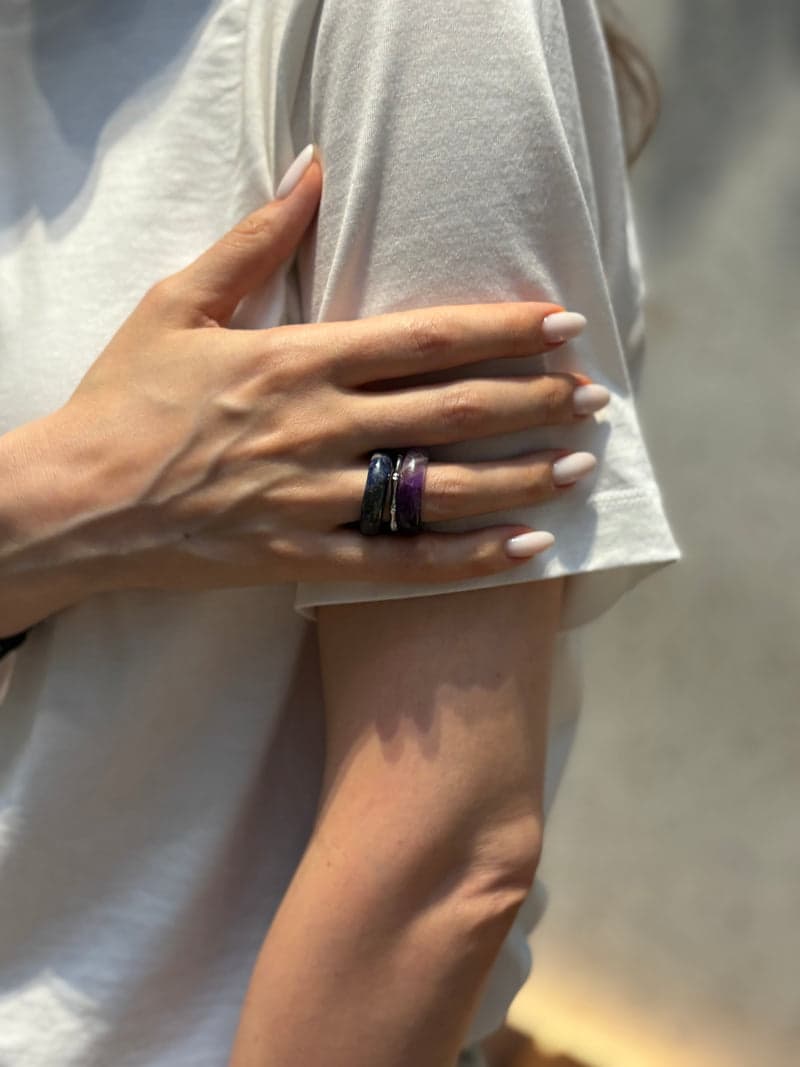
Affiliate link: if you buy through it, Astra Trainer may earn a commission. The price is the same for you.
Photographs courtesy of Aven Atelier.
What amethyst actually is
Amethyst is quartz: the same mineral as clear rock crystal, silicon and oxygen, but coloured purple. Unlike agate or jasper, which are quartz in microscopic fibres, amethyst grows as proper crystals, often large enough to see each point. It sits at 7 on the Mohs scale, hard enough to wear every day without much care.
Most of it grows inside cavities in volcanic rock. Gas bubbles trapped in cooling lava leave hollow pockets, and over a very long time silica-rich water fills them with crystals growing inward from the walls. Split one open and you have a geode, a stone shell lined with purple points. Some Brazilian and Uruguayan geodes are tall enough for a person to stand inside.
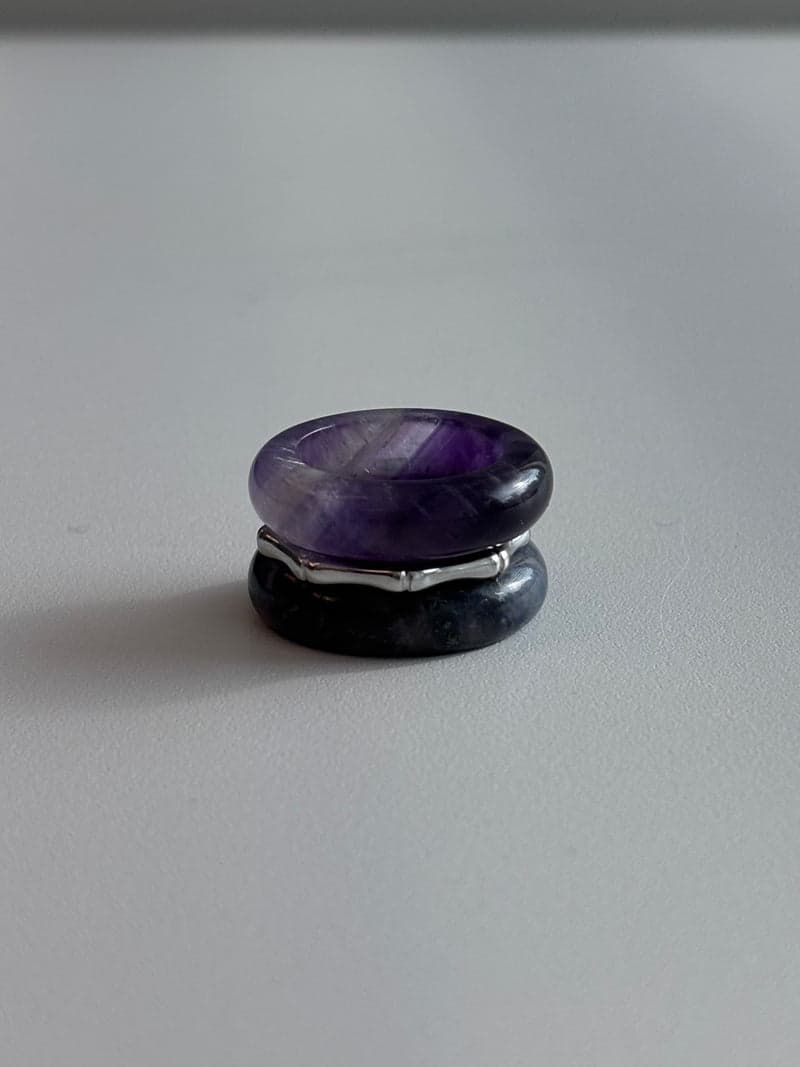
Its colour ranges from the palest lilac to a purple so deep it looks almost black, often in bands or zones within a single crystal. The deepest, most even colour has always been the most prized.
Why it is purple
The colour is one of the most interesting in the mineral world, because it needs two things to happen, a long time apart.
First, a small amount of iron has to be built into the crystal as it grows, taking the place of some of the silicon. On its own, that iron does very little to the colour. Then, over geological time, the crystal has to be exposed to natural radiation from the rock around it. The radiation knocks electrons out of place around the iron and creates what mineralogists call a colour centre, a defect in the crystal that absorbs yellow-green light. What remains for the eye is purple.
So the purple of an amethyst is not a pigment. It is a record of radiation received slowly, underground, over an enormous span of time. That is also why the colour can be undone.
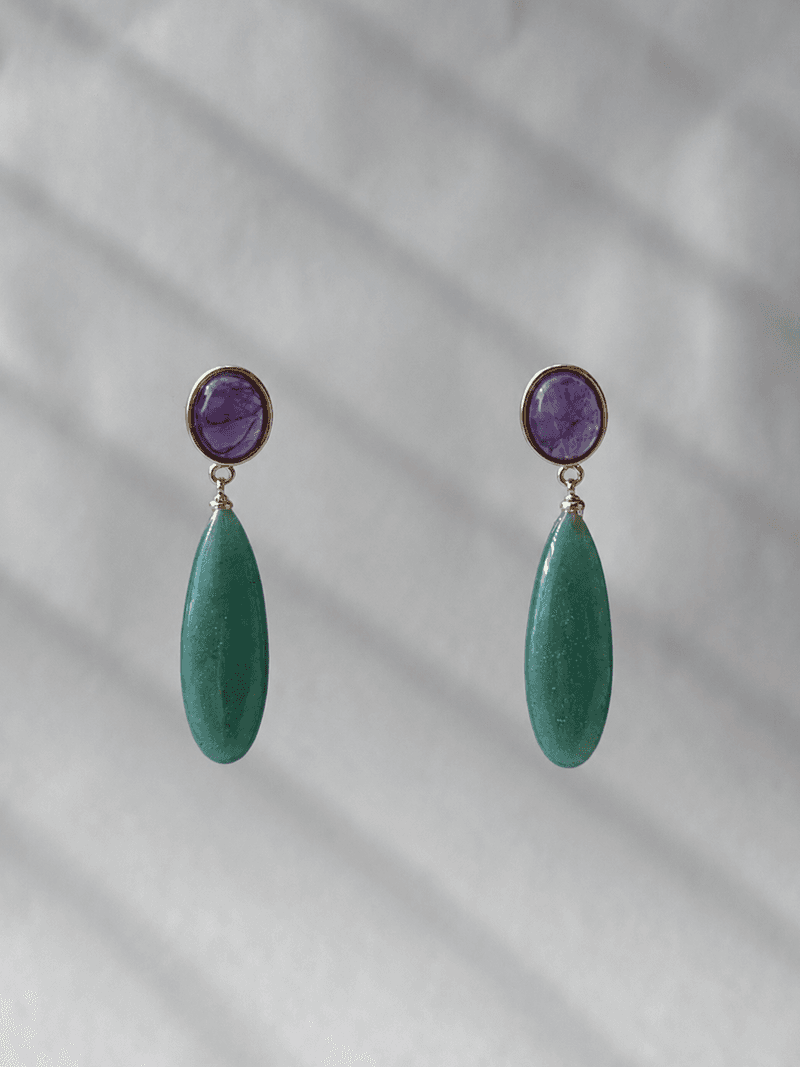

Affiliate link: if you buy through it, Astra Trainer may earn a commission. The price is the same for you.
Photographs courtesy of Aven Atelier.
Check yourselfBefore you read on: the Greek name amethystos means not drunk. What about the stone itself might first have tied it to wine and to staying sober?Show the answerHide the answer
Plausibly its colour. Amethyst is close to the colour of red wine mixed with water, which is how the Greeks usually drank it, so a cup carved from it could make water look like wine, or wine look weaker than it was. The belief itself is genuinely ancient. The tale of the wine god and the maiden Amethyste that usually explains it came much later, from a French poet in 1576.
The name, and the myth that is not ancient
The Greek amethystos means not drunk: a, not, and methystos, intoxicated. The belief that the stone guarded against drunkenness is genuinely ancient. Greeks wore it, carved drinking cups from it, and some are said to have held it in the mouth while drinking.
The story usually told to explain the belief is much later. In it, the god of wine pursues a maiden named Amethyste, a goddess turns her into white stone to protect her, and the god's remorseful tears of wine stain the stone purple. No ancient source contains it. It was written by the French poet Rémy Belleau in 1576, in a poem called L'Amethyste, ou les Amours de Bacchus et d'Amethyste.
That leaves the ancient meaning standing on its own, and it is a simple one. Amethyst is close to the colour of red wine mixed with water, which is how the Greeks usually drank it. A cup that made water look like wine, or wine look weaker than it was, is a plausible root for the idea. The belief is old. The myth decorating it is Renaissance poetry.
A precious stone, until Brazil
For most of history amethyst was expensive. In the Middle Ages it was counted among the cardinal gems, alongside diamond, ruby, sapphire and emerald. In the Renaissance, fine amethyst could command half the price of sapphire.
That changed in the nineteenth century, when enormous amethyst geode deposits were opened in southern Brazil, in Rio Grande do Sul, and later in neighbouring Uruguay. They sit in the same ancient basalt flows that produced the agate the cutters of Idar-Oberstein were importing at the same time. By the 1830s and 1840s Brazilian amethyst was arriving in quantities no one had seen before, and the price collapsed. It never recovered.
Amethyst is the clearest case in the gem trade of value set by scarcity rather than beauty. The stone did not change. The supply did. A good amethyst today costs a small fraction of what the same stone would have fetched two hundred years ago, and it is exactly as purple.
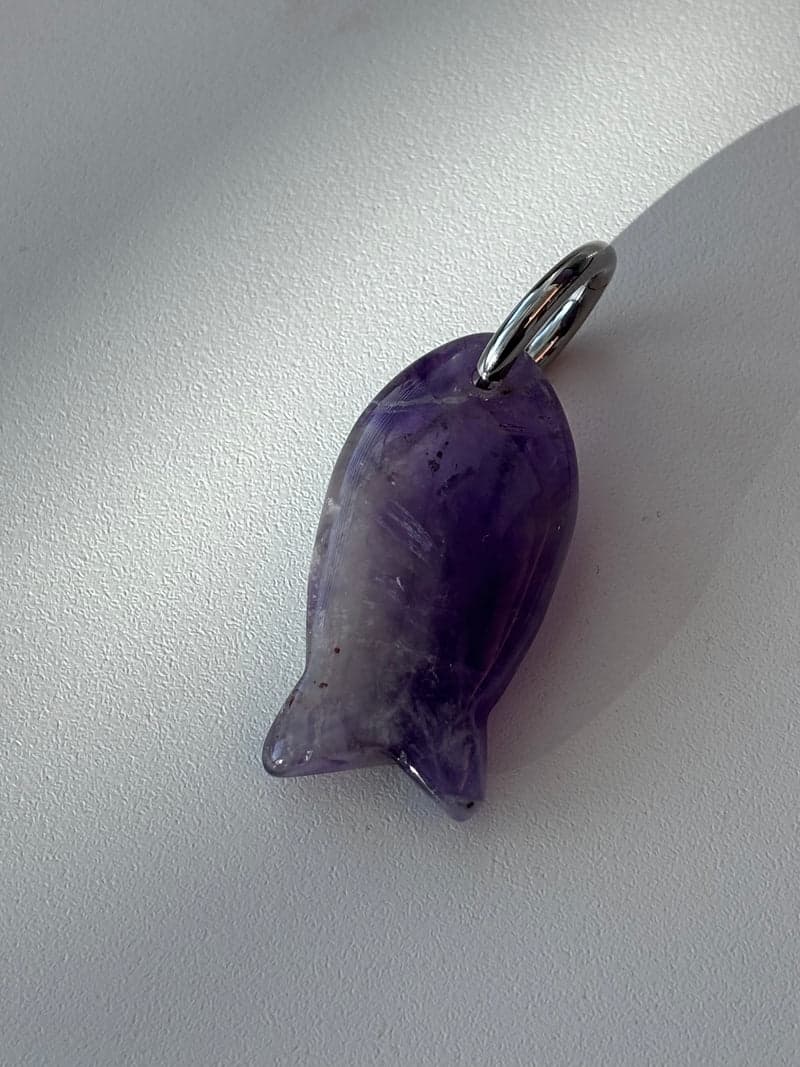
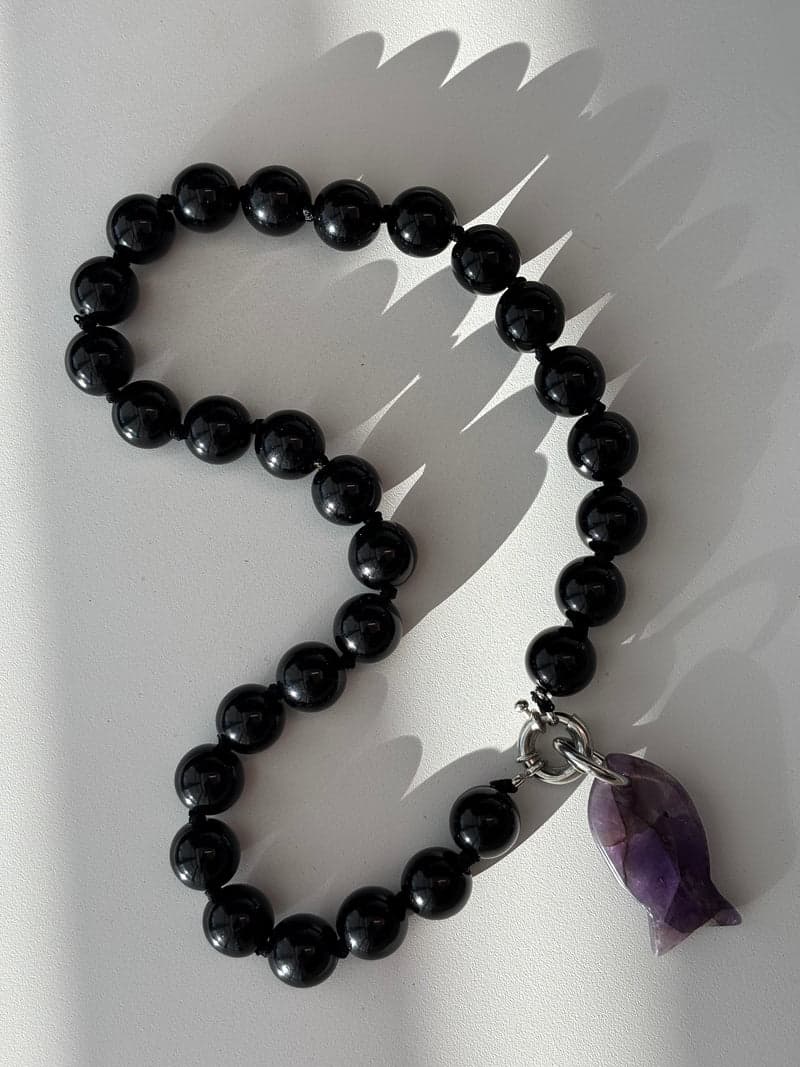
Affiliate link: if you buy through it, Astra Trainer may earn a commission. The price is the same for you.
Photographs courtesy of Aven Atelier.
Heat, and the citrine question
Because amethyst's colour is a defect created by radiation, heat can undo it. Warmed carefully, amethyst loses its purple. Taken past roughly 440 degrees Celsius, the iron settles into a different state and the stone turns yellow to orange. At a narrow range just below that, some material turns green, which is sold as prasiolite.
This matters because the yellow stone is sold as citrine. Natural citrine is rare. According to GIA, most citrine on the market is the result of heating amethyst. It is still quartz, and heating is a stable, long-established treatment, but the colour was made in a furnace rather than in the ground.
Heated citrine often gives itself away by its colour: a reddish or burnt orange that natural citrine rarely shows. Natural citrine tends to be a paler, more even yellow.
Not a health or safety instrument. No stone treats any illness, and there is no evidence that amethyst or any other mineral has therapeutic effects on physical or mental health conditions. That includes the old belief about drinking. Nothing here is medical advice, and no stone should be used in place of medical care.
Sunlight, and keeping the colour
The same fragility works in daylight, more slowly. Ultraviolet light also breaks down the colour centres, so amethyst left in strong sun for long periods can fade. The deepest, most saturated stones are the most vulnerable.
In practice this is a matter of years in a sunny window, not an afternoon on the beach. Worn and then put away, amethyst keeps its colour indefinitely. Displayed on a sill in direct light, a geode can lose noticeable colour over time. The simple habit is to store it out of the sun.
Affiliate link: if you buy through it, Astra Trainer may earn a commission. The price is the same for you.
Photographs courtesy of Aven Atelier.
Synthetic amethyst
Amethyst can be grown in a laboratory, and has been on a commercial scale since the 1970s, particularly in Russia. The method, hydrothermal growth, imitates nature closely: quartz is dissolved in hot water under pressure and grown onto a seed crystal, with iron added and the colour produced by irradiation afterwards.
Synthetic amethyst is chemically real amethyst, and by eye it is very hard to tell from natural. Laboratories separate them partly by the way the crystals are built. Most natural amethyst is repeatedly twinned, in a pattern called Brazil law twinning, while most synthetic amethyst grows as a single, untwinned crystal. Infrared spectroscopy adds further evidence.
For jewellery at everyday prices this rarely matters, because natural amethyst is itself inexpensive. It matters for large, flawless, intensely coloured stones sold at a premium, where a laboratory report is the only way to be sure.
Telling what you have
| What you see | What it usually means |
|---|---|
| Purple in zones or bands, paler at the edges | Typical of natural amethyst |
| Reddish or burnt orange yellow quartz | Probably heated amethyst sold as citrine |
| Pale green quartz, sold as prasiolite or green amethyst | Usually heated amethyst |
| Large, flawless, perfectly even deep purple | Could be natural or synthetic; only a lab can say |
| Colour faded on one side of a displayed piece | Sun damage to the colour centres |
As with every stone in this series, the most useful step is a question to the seller: is the colour natural, heated, or grown? For amethyst the answer is usually natural. For citrine it is usually heated. Either way, a seller who knows will say so plainly.

Affiliate link: if you buy through it, Astra Trainer may earn a commission. The price is the same for you.
Photographs courtesy of Aven Atelier.
What to take from this
Amethyst is crystalline quartz, coloured purple by traces of iron combined with natural radiation received over geological time.
The name means not drunk, and the belief behind it is ancient. The myth of Bacchus and Amethyste that usually accompanies it was written in 1576.
Amethyst was a cardinal gem until Brazilian deposits in the nineteenth century made it plentiful. Heating turns it into most of the citrine on the market, and strong sunlight slowly fades it.
Which is why the amethyst meaning worth keeping is not a promise of calm. It is that the colour of a stone can be a record of time, that a price can fall without anything about the stone changing, and that a good story is often younger than the belief it decorates.
Test yourself
Question 1 of 3
Why does the article say the purple of amethyst is not a pigment?
What gives amethyst its purple colour?
Traces of iron built into the quartz crystal, combined with natural radiation from surrounding rock over geological time. The radiation creates colour centres around the iron that absorb yellow-green light, leaving purple. Heat or long exposure to sunlight can undo it.
What does the name amethyst mean?
It comes from the Greek amethystos, meaning not drunk. The ancient belief that the stone guarded against drunkenness is genuine. The story of Bacchus and the maiden Amethyste often told to explain it was written by the French poet Remy Belleau in 1576.
Why is amethyst so inexpensive now?
It was once counted among the cardinal gems with diamond, ruby, sapphire and emerald. In the nineteenth century huge geode deposits in Brazil, and later Uruguay, flooded the market from the 1830s onward and the price collapsed permanently.
Is citrine just heated amethyst?
Most of it is. Natural citrine is rare, and according to GIA most citrine on the market is amethyst that has been heated until it turns yellow to orange. Heated citrine often shows a reddish or burnt orange tone that natural citrine rarely has.
Does amethyst fade in the sun?
It can. Ultraviolet light slowly breaks down the colour centres, so amethyst kept in strong direct sunlight for long periods may lose colour, the deepest stones most of all. Stored out of the sun it keeps its colour indefinitely.
Where this leads. Crystal Meanings and Their Origins, Traced does for the whole list what this article does for one stone: it follows the modern meanings back to the people who wrote them down, and finds them younger than expected.