The aventurine meaning in most crystal books is luck and opportunity, and for once the modern meaning has a real root. The name comes from the Italian for chance. But the chance in question did not happen to a stone. It happened in a Venetian glass furnace, and the natural stone was named afterwards, after the glass it resembled.
Affiliate link: if you buy through it, Astra Trainer may earn a commission. The price is the same for you.
Photographs courtesy of Aven Atelier.
What aventurine actually is
Aventurine is not a mineral. It is a rock: a quartzite, made of many small grains of quartz packed together, with flakes of other minerals caught between them. That makes it different from the stones either side of it on a crystal shop shelf. Clear quartz is a single crystal. Agate is quartz in fibres too fine to see. Aventurine is quartz in grains you can almost see, like a very fine, very hard sandstone that has been welded solid.
Because it is a rock rather than a single mineral, its properties vary from piece to piece. Its hardness is around 6.5 on the Mohs scale, a little under single crystal quartz, and it breaks with a rough, grainy surface rather than a clean shell-shaped fracture.
The flakes caught between the grains are what matter. In green aventurine they are usually fuchsite, a mica that carries chromium. A few percent of fuchsite by volume is enough to turn the whole stone green.
The sparkle has a name
Mica forms in thin, flat plates. When a stone full of tiny plates is polished and tilted in the light, the plates that happen to face the right way flash back at the eye, and the stone glitters. The effect is called aventurescence, and it is named after this stone.
Aventurescence is easy to miss in a photograph and obvious in the hand. A still picture shows a soft green. Turn the same piece slowly under a lamp and it throws back a scatter of small, silvery points. That movement is the most reliable way to recognise the stone, and one of the things an imitation finds hardest to copy convincingly.
Affiliate link: if you buy through it, Astra Trainer may earn a commission. The price is the same for you.
Photographs courtesy of Aven Atelier.
A stone named after its imitation
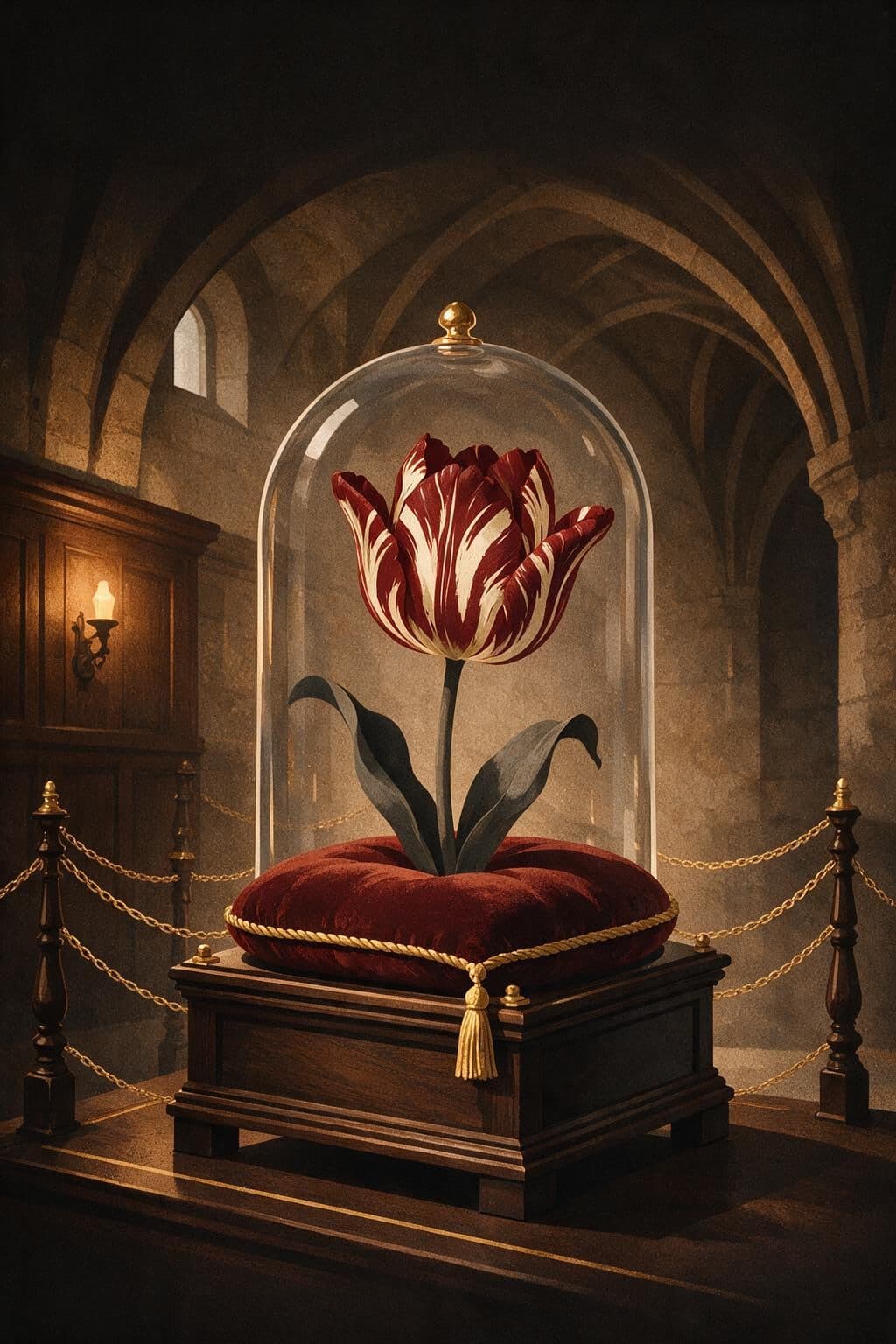
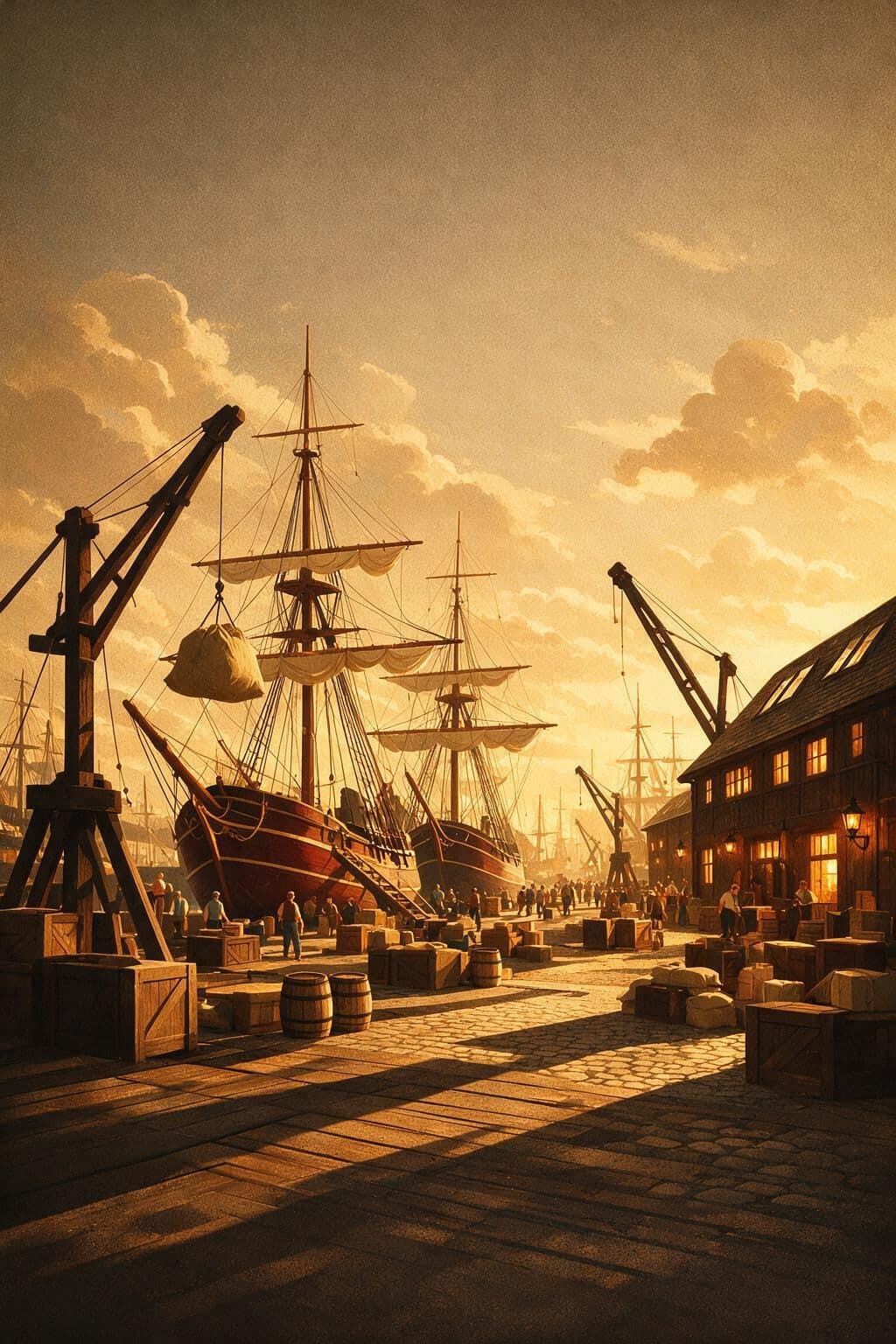
The name derives from the Italian a ventura, by chance. The story usually told is that a workman at Murano, the glassmaking island of Venice, let copper filings fall into a pot of molten glass, and the batch came out full of glittering flecks. The glass was called avventurina, and when people later saw a natural stone that glittered the same way, they gave it the same name.
The accident story is a legend. What the records show is less romantic and more interesting. The process for making glittering copper glass in Venice was held by the Miotti family in the seventeenth century, under an exclusive licence from the Doge, and the earliest documentation of the material dates to 1626. The Penn Museum in Philadelphia holds an amulet of the same kind of glass from Persia, dated to the twelfth or thirteenth century, so the Venetians were not the first to make it either.
Either way, the order of events is the unusual part. Almost every imitation in the jewellery trade is named after the natural thing it copies. Aventurine is one of the very few natural stones named after its imitation.
Affiliate link: if you buy through it, Astra Trainer may earn a commission. The price is the same for you.
Photographs courtesy of Aven Atelier.
Goldstone, still in the shops
The Venetian glass is still made and still sold, usually as goldstone. It is also called aventurine glass, monk's gold, and sometimes, confusingly, sandstone. The most common version is a warm reddish brown full of copper sparkles. Blue and purple versions are made with cobalt or manganese, and a green version with chromium.
Making it takes real skill. The glass has to be melted with copper in an atmosphere starved of oxygen, then held in a narrow band of temperature so that crystals of metallic copper can grow inside it without melting or tarnishing. The best material comes from the heart of each batch.
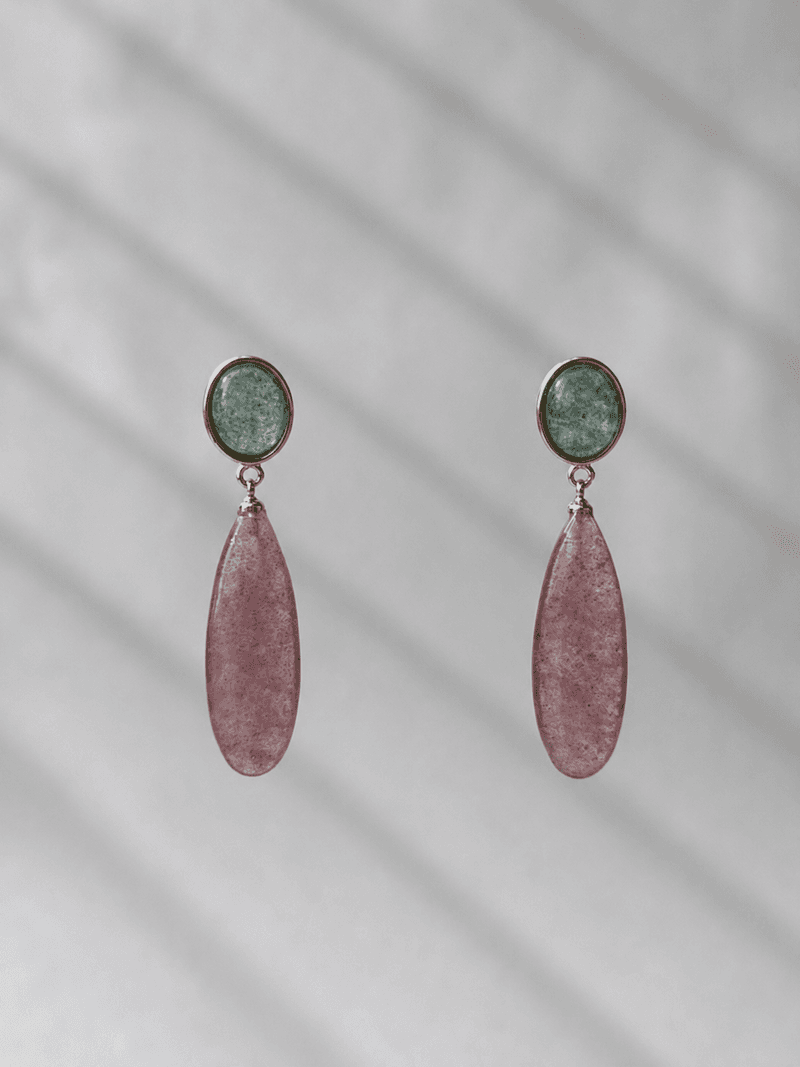
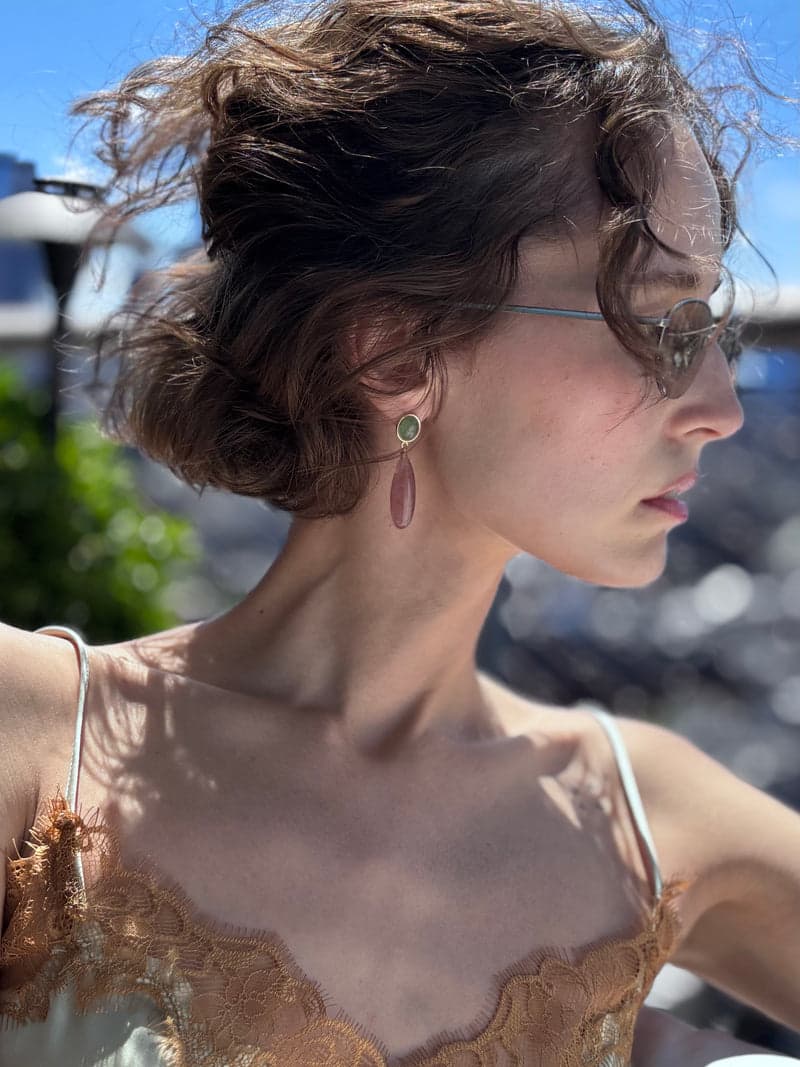
Goldstone is a fine material in its own right. It becomes a problem only when it is described as a natural stone, which it often is. The giveaway is the sparkle itself. In goldstone the flecks are coarse, bright, metallic and evenly spread through the glass. In natural aventurine they are finer, silvery rather than coppery, and scattered unevenly, following the grain of the rock.
Affiliate link: if you buy through it, Astra Trainer may earn a commission. The price is the same for you.
Photographs courtesy of Aven Atelier.
Green, and where it comes from
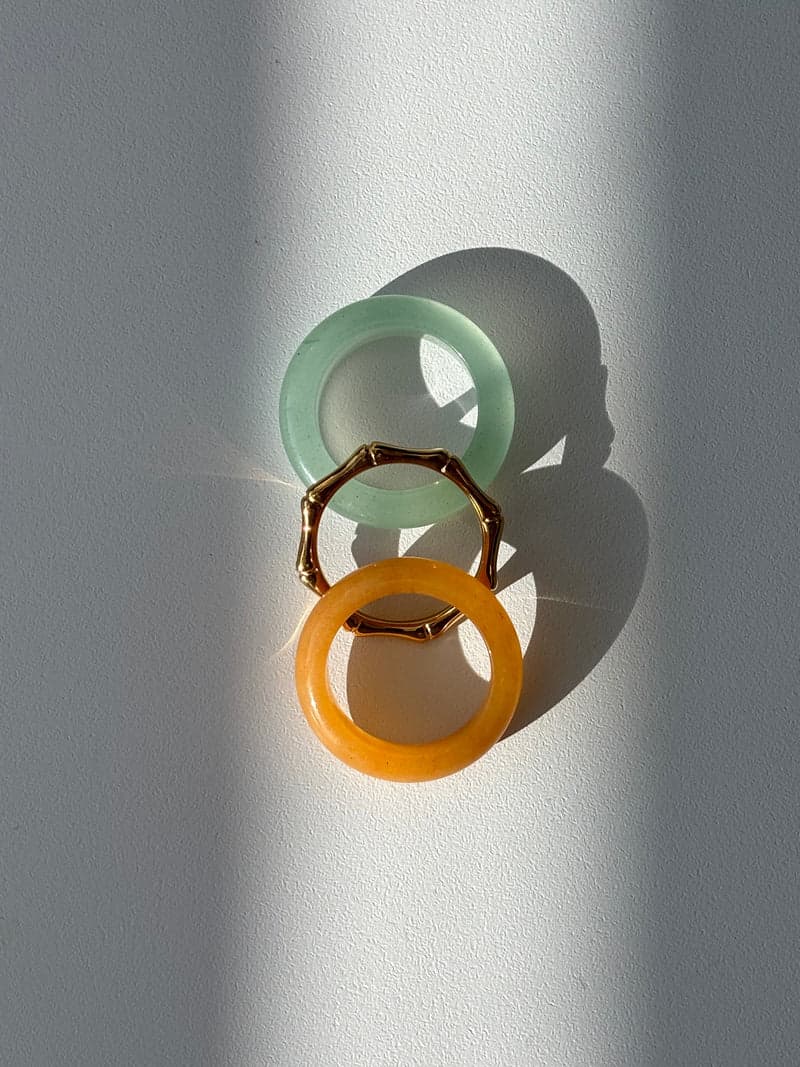
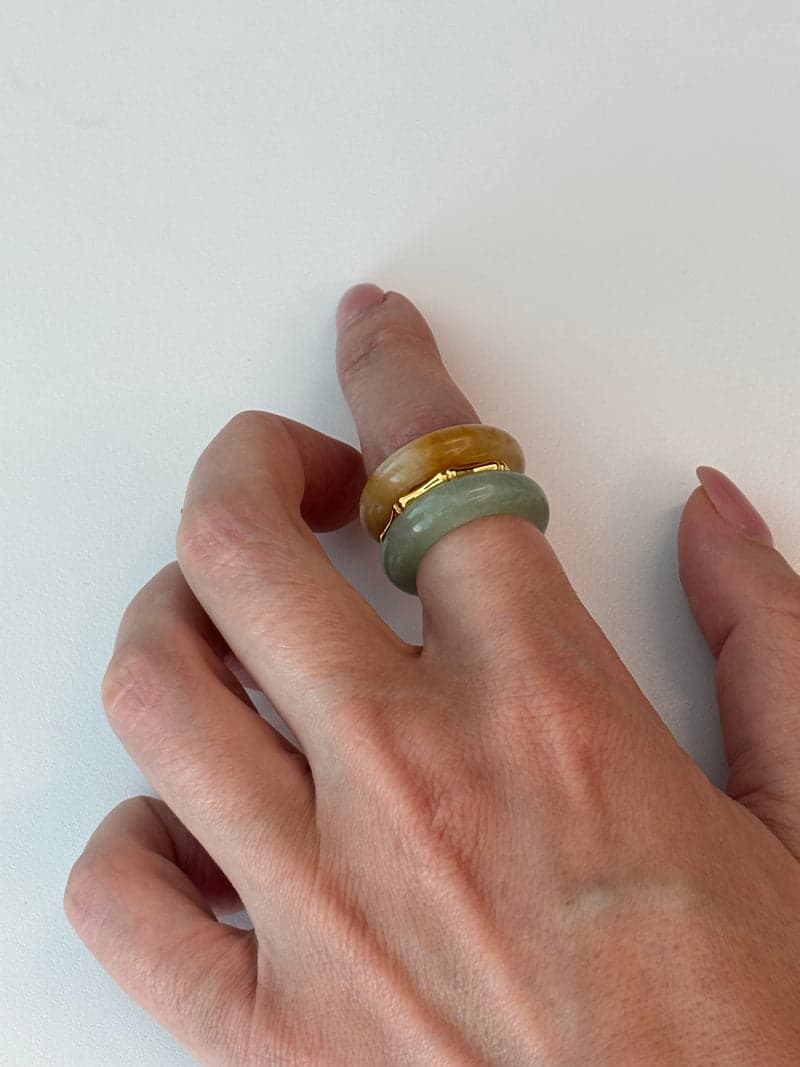
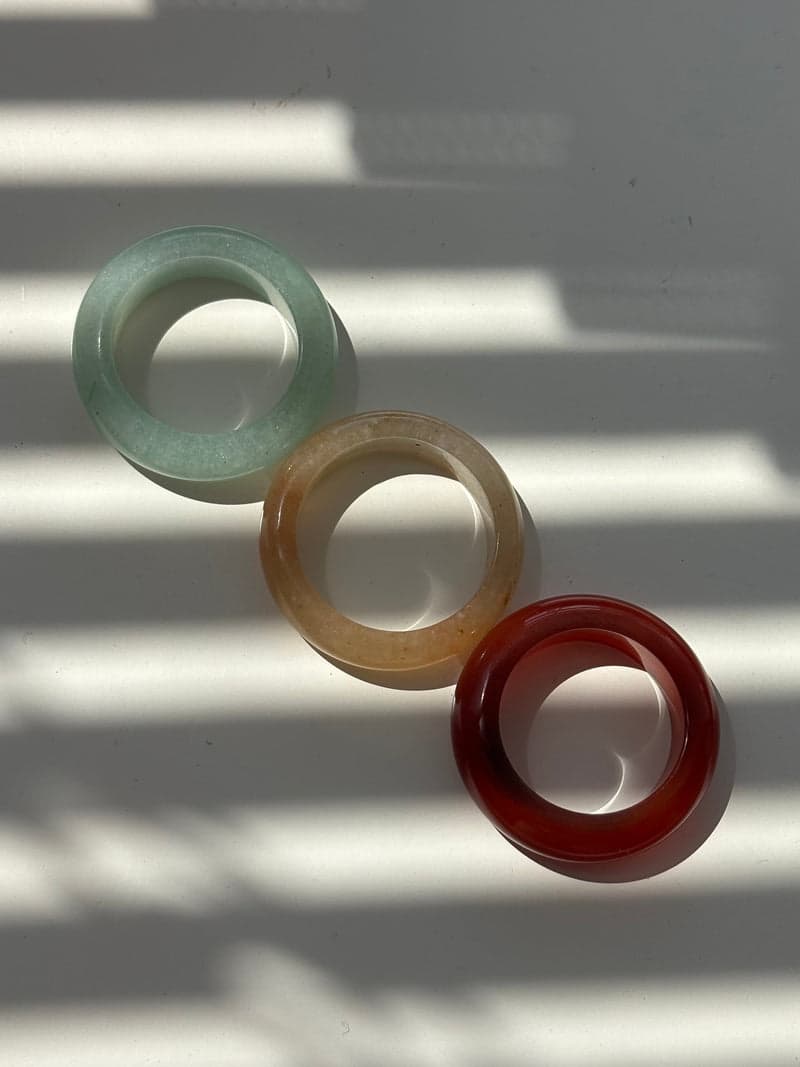
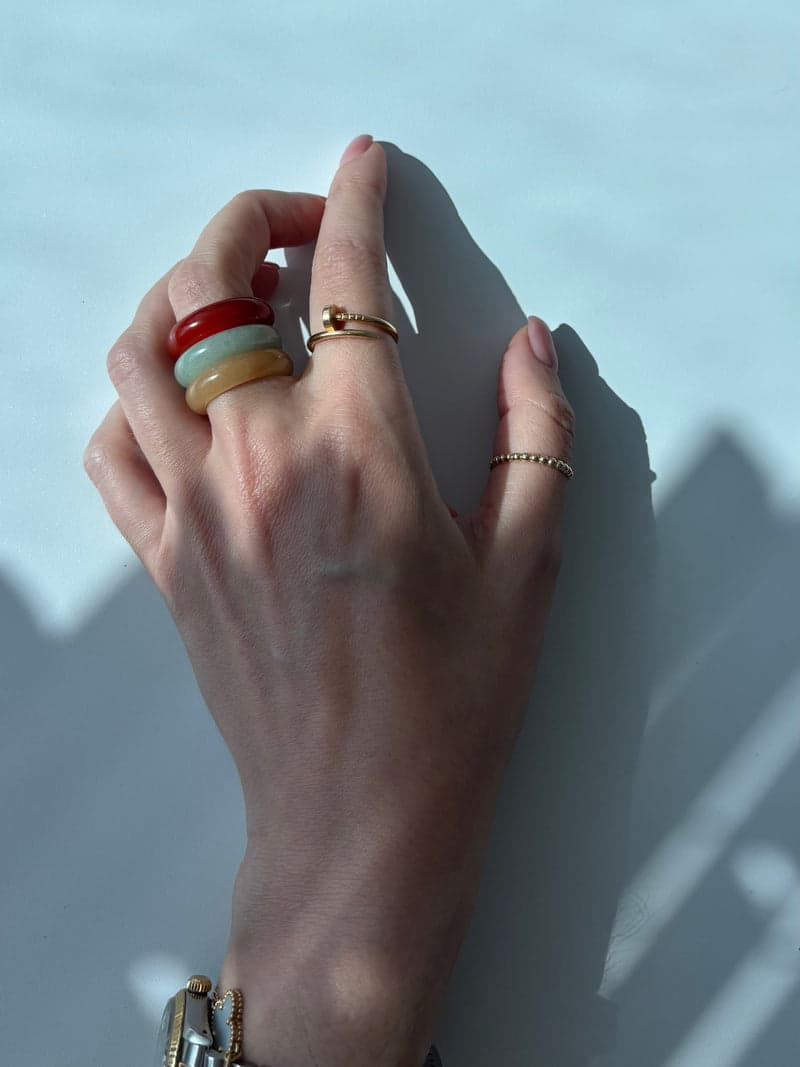
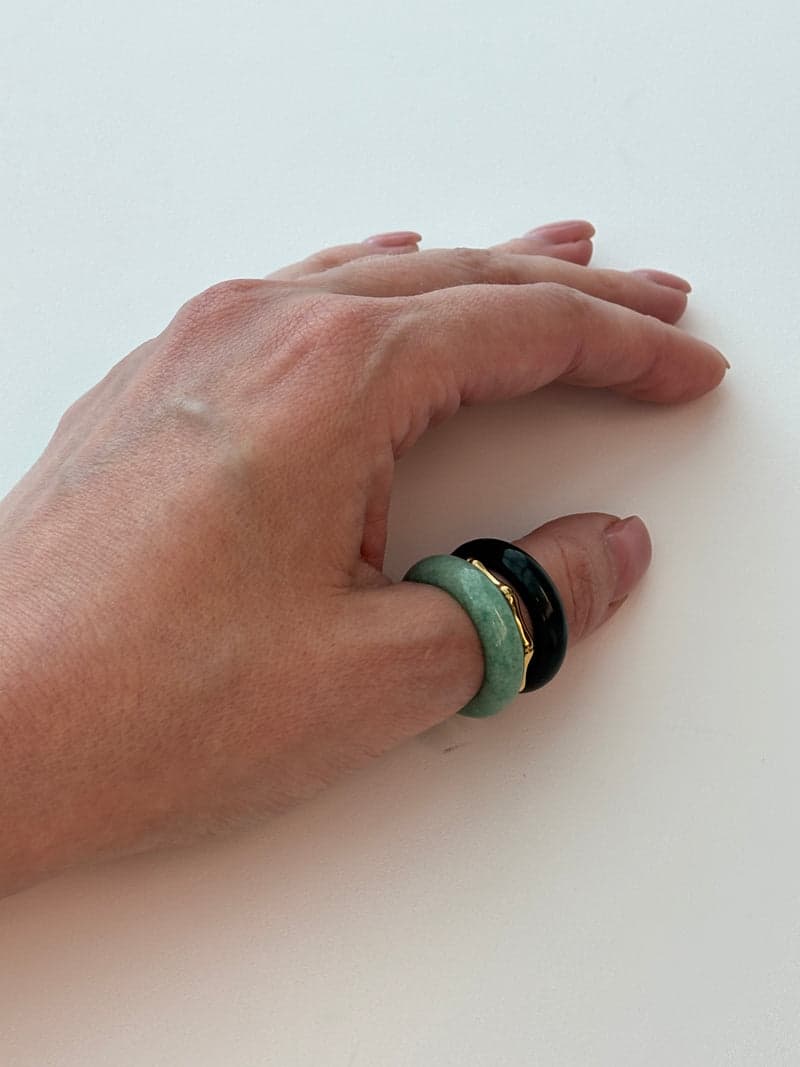
Green is by far the most common colour, and most green aventurine on the market comes from India, particularly the regions around Mysore and Chennai, where it has long been carved into beads, bowls and figures. Other colours come from other flakes. Hematite and goethite give orange, red and brown. Cream, grey and orange material comes from places including Chile, Spain and Russia.
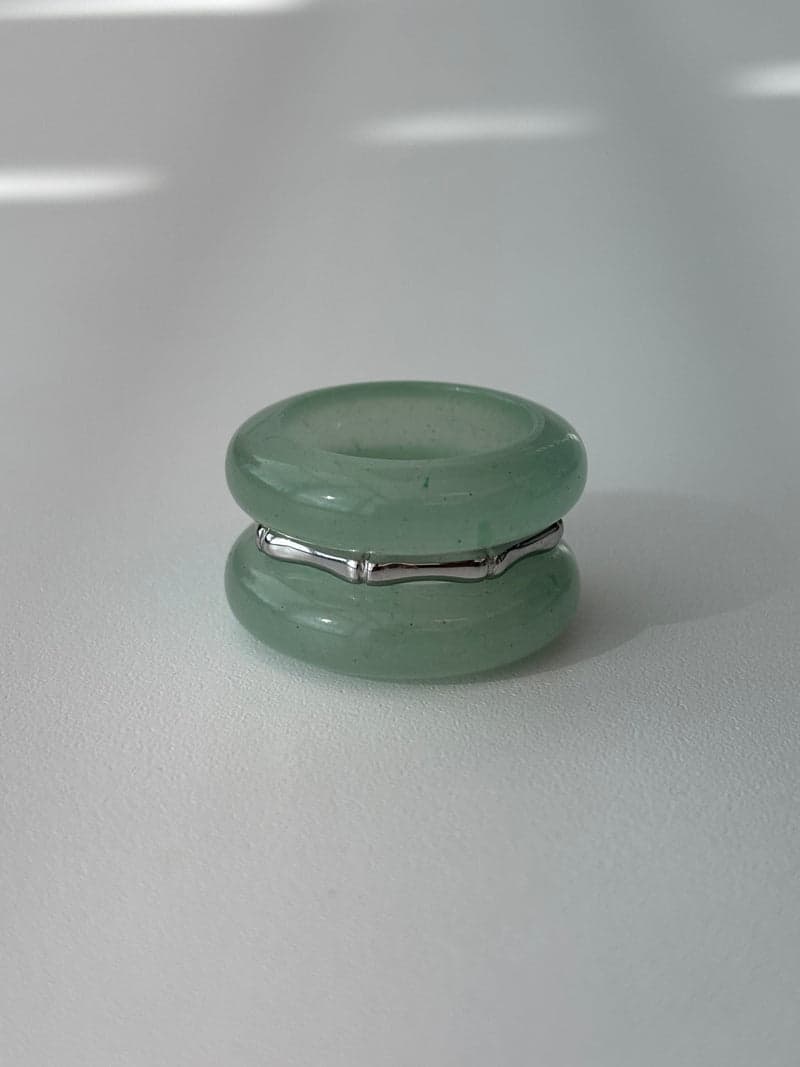
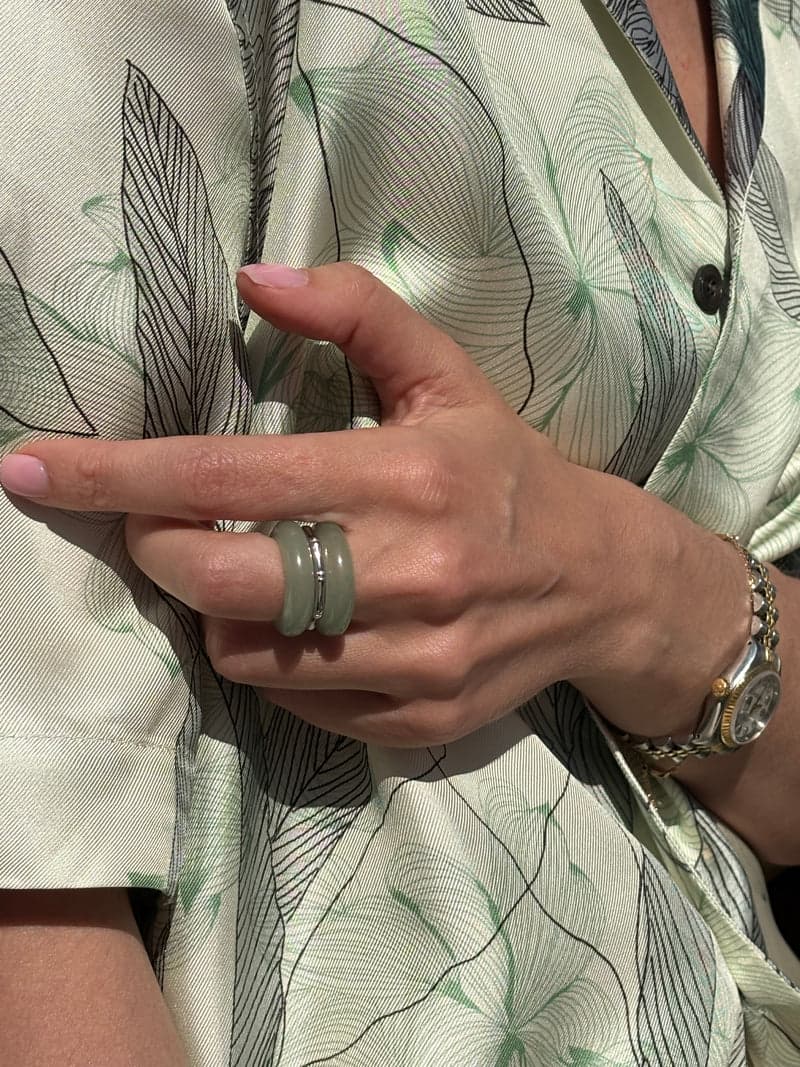
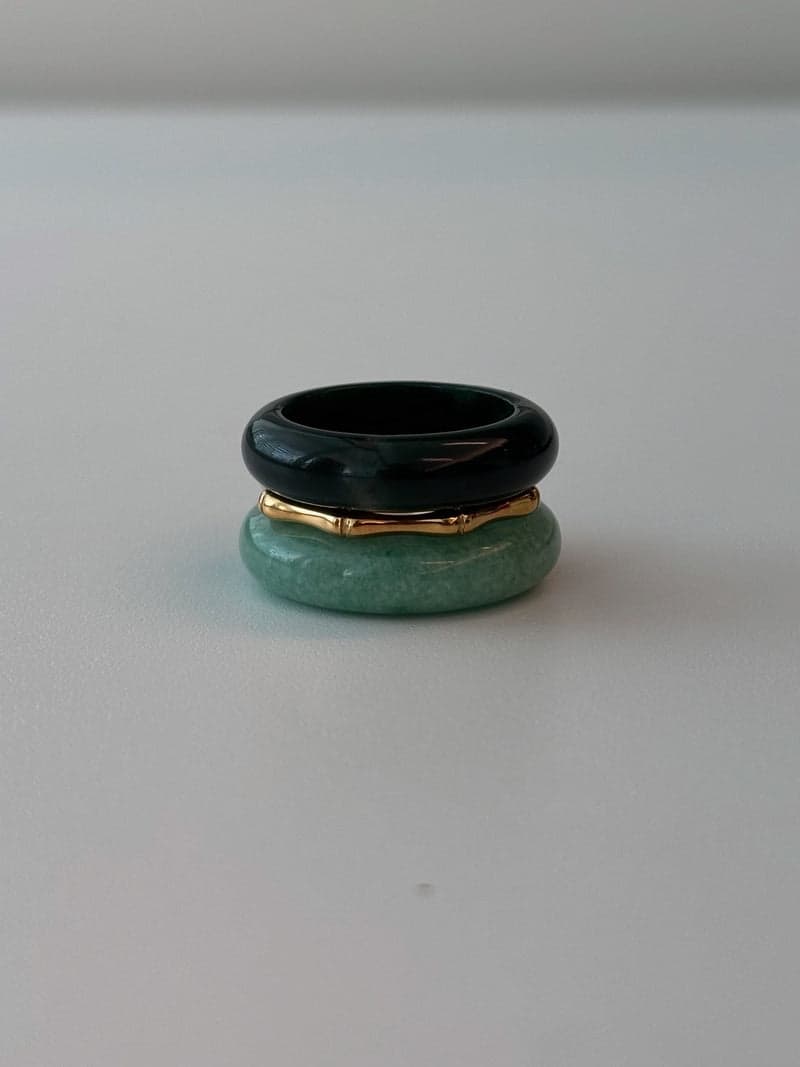
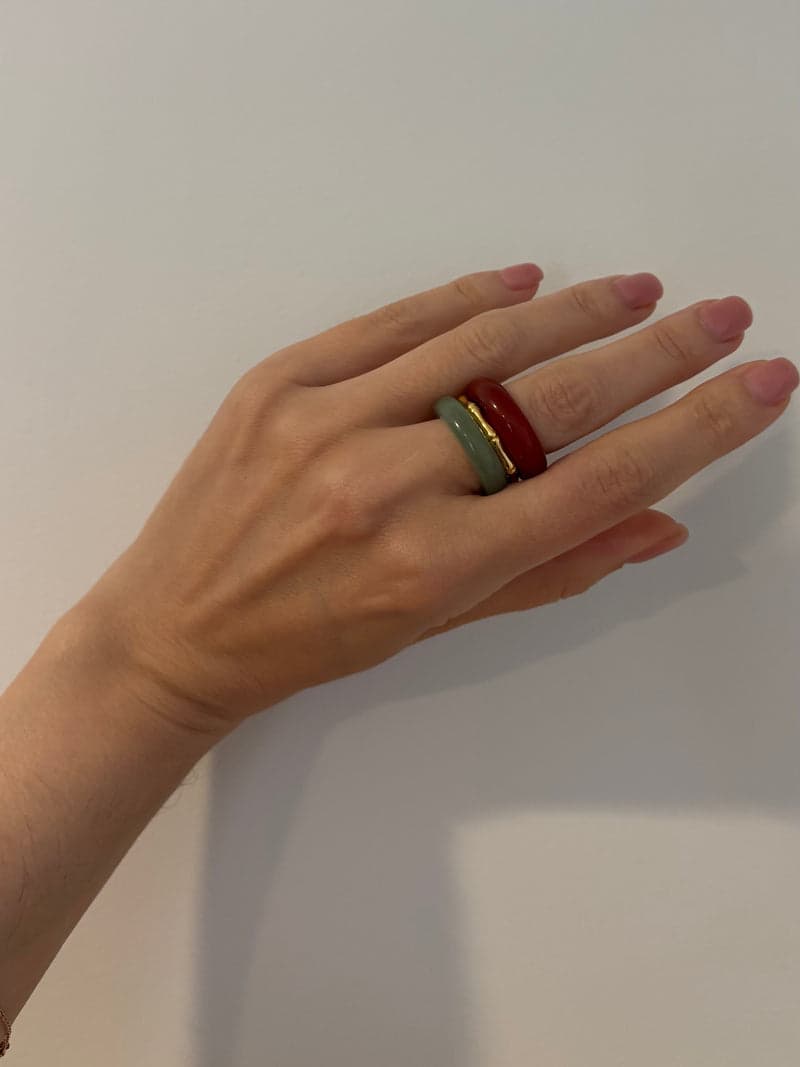
Green aventurine is often mistaken for jade. The two can look alike at a glance. The difference shows in the sparkle, which jade does not have, and in the texture: aventurine is granular, jade is fibrous and tough.
Where the fuchsite is very dense, aventurine turns dark and nearly opaque, and can be taken for malachite at first glance. Where it is sparse, the stone is pale and milky. Most jewellery sits between the two.
Affiliate link: if you buy through it, Astra Trainer may earn a commission. The price is the same for you.
Photographs courtesy of Aven Atelier.
Check yourselfBefore you read on: aventurine is a quartzite, a rock of quartz grains packed tightly together, and much of what passes for blue aventurine is dyed quartzite. How would dye get into a rock like that, and where in the finished stone would it give itself away?Show the answerHide the answer
Through cracks opened for it. Quartzite is typically heated to open fine cracks between its grains so that it will take colour, and colour concentrated along cracks and grain boundaries is the sign worth noticing. Dyed green quartzite is usually coloured with chromium salts, the same element that colours natural green aventurine, which is part of what makes it convincing.
Blue aventurine, and the dye question
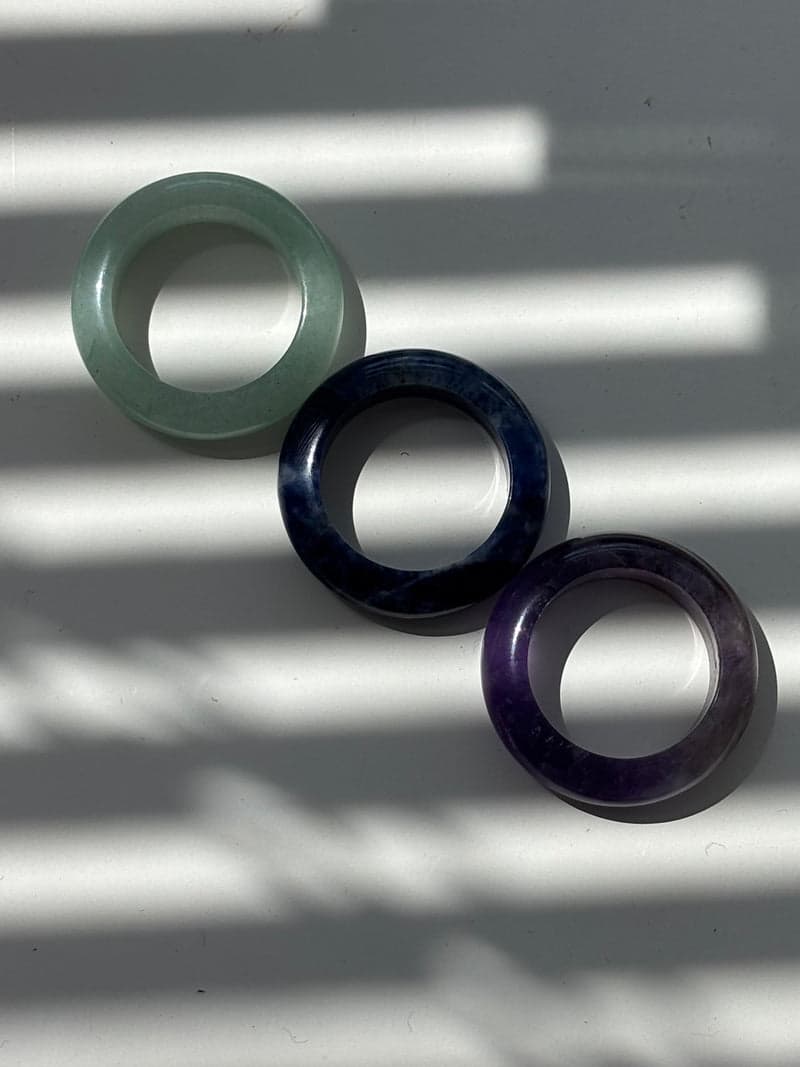
Natural blue aventurine exists. Its colour comes from inclusions of dumortierite, a blue borosilicate mineral, and it is usually a dark, dusky blue with a subtle shimmer.
Much of what is sold as blue aventurine is something else: quartzite that has been dyed. Quartzite can be made to take colour, typically by heating it to open fine cracks between its grains, and dyed material is common enough that some gemmologists treat any bright blue aventurine with suspicion. The same is true, to a lesser degree, of very saturated green. Dyed green quartzite is usually coloured with chromium salts, the same element that colours natural green aventurine, which is part of what makes it convincing.
As with agate, dye is not a fault in itself. It is a fact about the stone that ought to be stated. Colour concentrated along cracks and grain boundaries, and colour that looks more vivid than the rest of a seller's stock, are the signs worth noticing.
Not a health or safety instrument. No stone treats any illness, and there is no evidence that aventurine or any other mineral has therapeutic effects on physical or mental health conditions. Nothing here is medical advice, and no stone should be used in place of medical care.
Aventurine is not the only sparkling stone
The word aventurine is also used for a second, unrelated material: aventurine feldspar, better known as sunstone. It is a feldspar rather than a quartz, it glitters because of tiny plates of hematite or copper, and it is usually orange to red. It is generally more transparent than aventurine quartz and slightly softer.
Affiliate link: if you buy through it, Astra Trainer may earn a commission. The price is the same for you.
Photographs courtesy of Aven Atelier.
So the one word covers a glass, a quartz rock and a feldspar. Aventurine the natural stone sits in the middle, named for the glass and sharing its effect with a stone it has nothing else in common with. It is a small version of the same pattern the jade article describes: names in the stone trade were given by appearance long before anyone could say what things were made of.
Telling what you have
| What you see | What it usually means |
|---|---|
| Fine, silvery flecks, unevenly spread, visible when tilted | Natural aventurine quartz |
| Coarse, bright, coppery flecks spread evenly through the piece | Goldstone, a glass |
| Orange to red, more transparent, with glittering plates | Probably sunstone, a feldspar |
| Very bright blue or green, colour gathered along cracks | Likely dyed quartzite |
| Green with no sparkle at all, smooth and waxy | Probably not aventurine; ask what it is |
None of these is a laboratory test, but together they settle most cases. The best single habit is to look at the stone moving rather than still. Aventurescence is a behaviour, and behaviour is harder to fake than colour.
After that, the useful question to a seller is the same one as for any stone: is the colour natural or dyed? Aventurine is inexpensive enough that nobody has a reason to hesitate over the answer.
Affiliate link: if you buy through it, Astra Trainer may earn a commission. The price is the same for you.
Photographs courtesy of Aven Atelier.
What to take from this
Aventurine is a quartzite, a rock of fine quartz grains, and its green usually comes from fuchsite, a mica that carries chromium.
Its glitter, aventurescence, comes from flat mineral plates reflecting light, and it shows best when the stone is moving.
The name comes from Venetian aventurine glass, now called goldstone, made under licence by the Miotti family in the seventeenth century. The natural stone was named after the glass, which still circulates as an imitation of it.
Which is why the aventurine meaning worth keeping is not a promise of luck. It is a reminder that a name can travel from a glass furnace to a mountain, and that the most useful thing to know about any stone is what it is actually made of.
Test yourself
Question 1 of 3
Why, according to the article, do aventurine's properties vary from piece to piece?
What is aventurine made of?
Aventurine is a quartzite, a rock made of small grains of quartz with flakes of other minerals between them. In green aventurine those flakes are usually fuchsite, a mica that carries chromium. Its hardness is around 6.5 on the Mohs scale.
Why does aventurine sparkle?
The flat mineral plates inside it reflect light when the stone is tilted, an effect called aventurescence. It shows best when the stone is moving, which is also the easiest way to recognise it.
Where does the name aventurine come from?
From the Italian a ventura, by chance, via avventurina, a glittering copper glass made in Venice. The natural stone was named after the glass it resembled, which makes it one of very few stones named after its imitation.
Is goldstone the same as aventurine?
No. Goldstone is a glass containing crystals of metallic copper, made in Venice under licence by the Miotti family in the seventeenth century. It is often sold as a natural stone. Its flecks are coarser, brighter and more evenly spread than those in natural aventurine.
Is blue aventurine natural?
Natural blue aventurine exists, coloured by the mineral dumortierite, but much of what is sold under the name is dyed quartzite. Very bright blue, or colour gathered along cracks, is a reason to ask the seller whether the colour is natural.
Where this leads. Crystal Meanings and Their Origins, Traced does for the whole list what this article does for one stone: it follows the modern meanings back to the people who wrote them down, and finds them younger than expected.