
The onyx meaning in most crystal books is strength, protection and self-control, usually attached to a smooth, solid black stone. Almost everything in that sentence would have surprised a Roman. To the ancient world, onyx was not black at all. It was a stone of straight, contrasting bands, prized because a skilled carver could cut through one colour into the next, and its name meant fingernail.
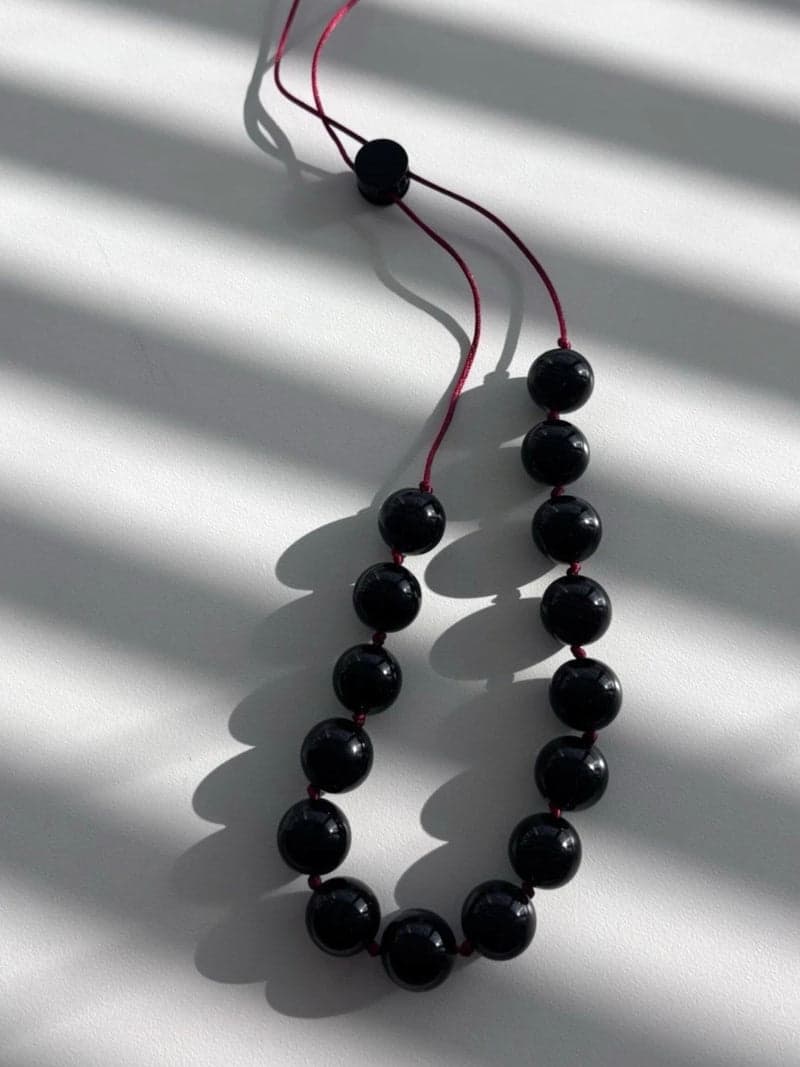

Affiliate link: if you buy through it, Astra Trainer may earn a commission. The price is the same for you.
Photographs courtesy of Aven Atelier.
What onyx actually is
Onyx is chalcedony, the same fine-grained quartz as agate and jasper. What sets it apart, in the classical definition, is its banding. Agate's bands curve and wander around the shape of the cavity it grew in. Onyx has straight, parallel bands of strongly contrasting colour, most often black and white.
When the bands are red or brown and white, the stone is called sardonyx, from sard, the old name for brownish-red chalcedony. Both behave like the rest of the family: hard at around 6.5 to 7 on the Mohs scale, tough, and able to take a deep polish.
So strictly, onyx names a pattern rather than a colour. The black stone sold under the name today is a much later use of the word, and usually a treated one.
A fingernail
The name comes from the Greek onyx, meaning fingernail or claw. The usual explanation is that the paler varieties, with their pinkish and white layers, look like a fingernail over the skin beneath it. The same Greek root survives in medical words for the nails.
Modern gem books often add a story in which Cupid trims the nails of the sleeping Venus and the clippings are turned to stone. It is charming, but it is best treated as decoration on the name rather than its source. The plainer explanation, a stone that looks like a nail, is the one the word itself supports.
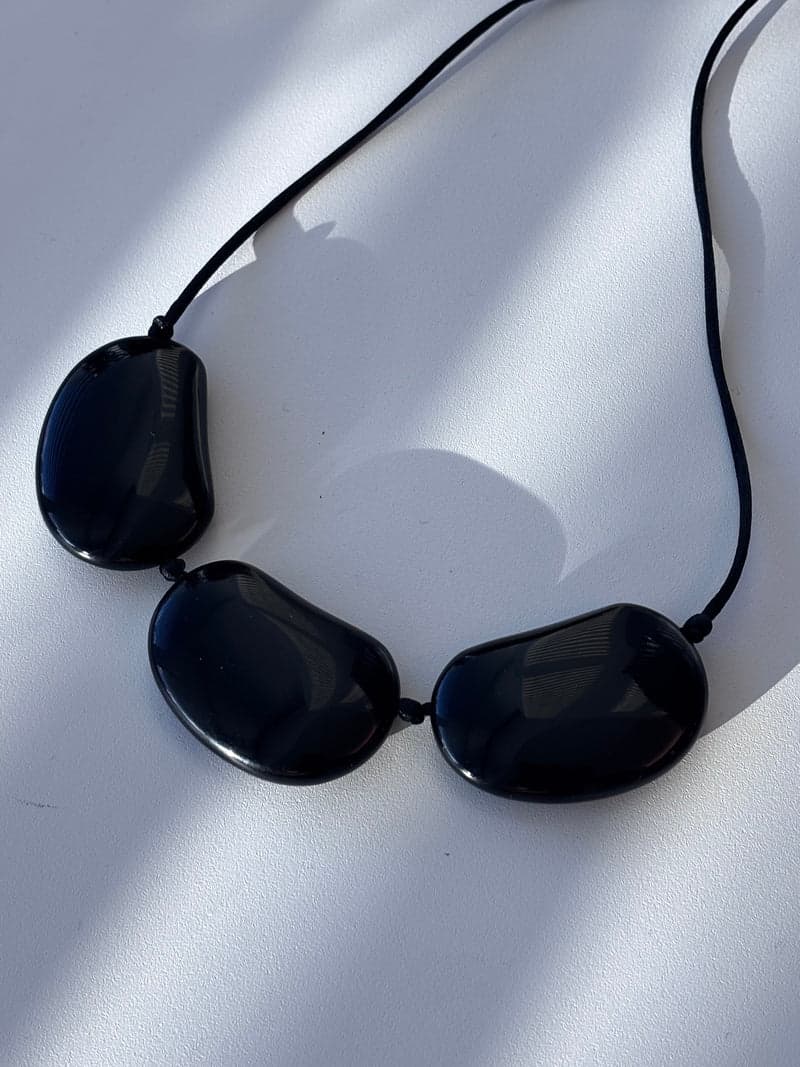

Affiliate link: if you buy through it, Astra Trainer may earn a commission. The price is the same for you.
Photographs courtesy of Aven Atelier.
Cameos, seals and straight bands
Straight bands are what made onyx valuable. A carver working a stone with a white layer over a dark one can cut a figure in the white and clear the background down to the dark, leaving a raised image in contrasting colour. That is a cameo, and banded onyx and sardonyx were its classic materials.
The greatest ancient cameos are cut from them. The Gemma Augustea in Vienna, showing the emperor Augustus among the gods, and the Great Cameo of France in Paris are both carved from layered onyx and sardonyx, with the figures standing out in white against a darker ground.
The same stones were used for seals. Pliny the Elder records that sardonyx was prized for seal rings because, almost alone among engraved stones, it released the sealing wax cleanly without pulling it away. Augustus's own seal was engraved by the gem cutter Dioscurides, and signed gems attributed to him survive.
Pliny and the three-stone forgery
Where a stone is valuable, it is faked, and onyx was no exception. Pliny describes imitation sardonyx made by cementing three separate stones together, one black, one white and one red, so skilfully that he says no skill could detect the fraud.
It is one of the earliest recorded gem forgeries, and it shows what buyers were paying for: the layers. A plain stone of one colour was worth far less than one where nature had stacked the colours neatly enough to carve through.
Two thousand years later the situation has turned around. The layered stone is now the rarity, and the plain black one, which the Romans would hardly have called onyx at all, is what fills the shops.
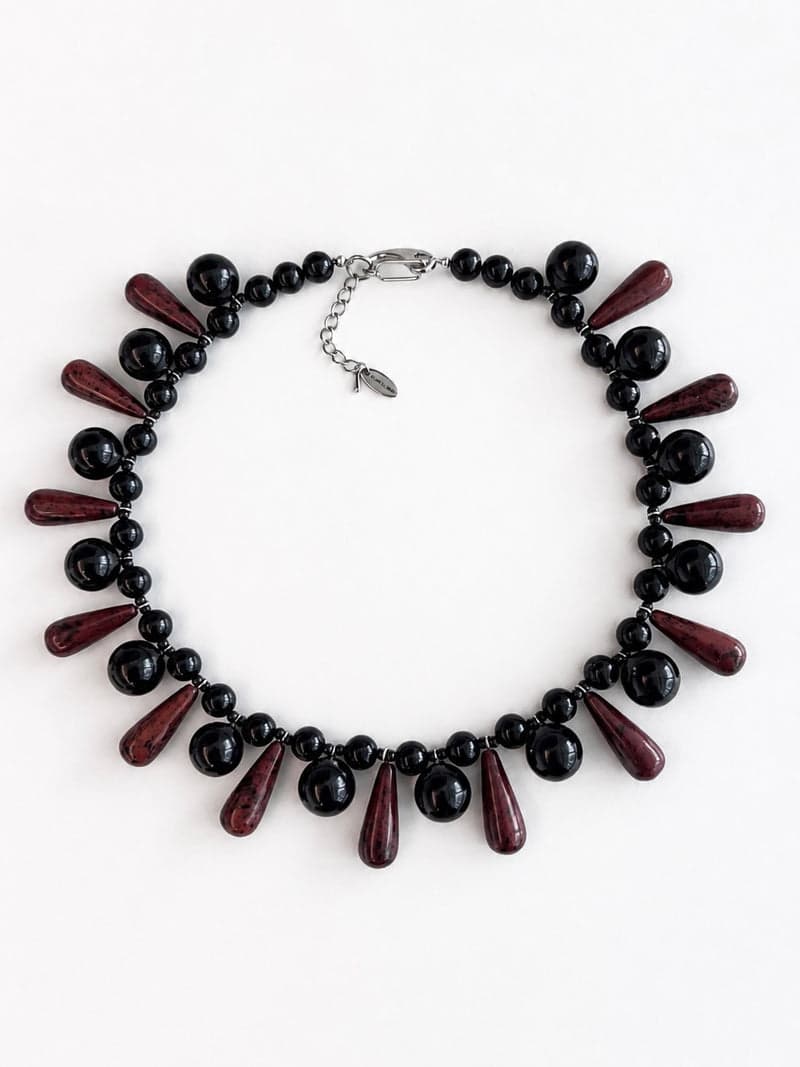
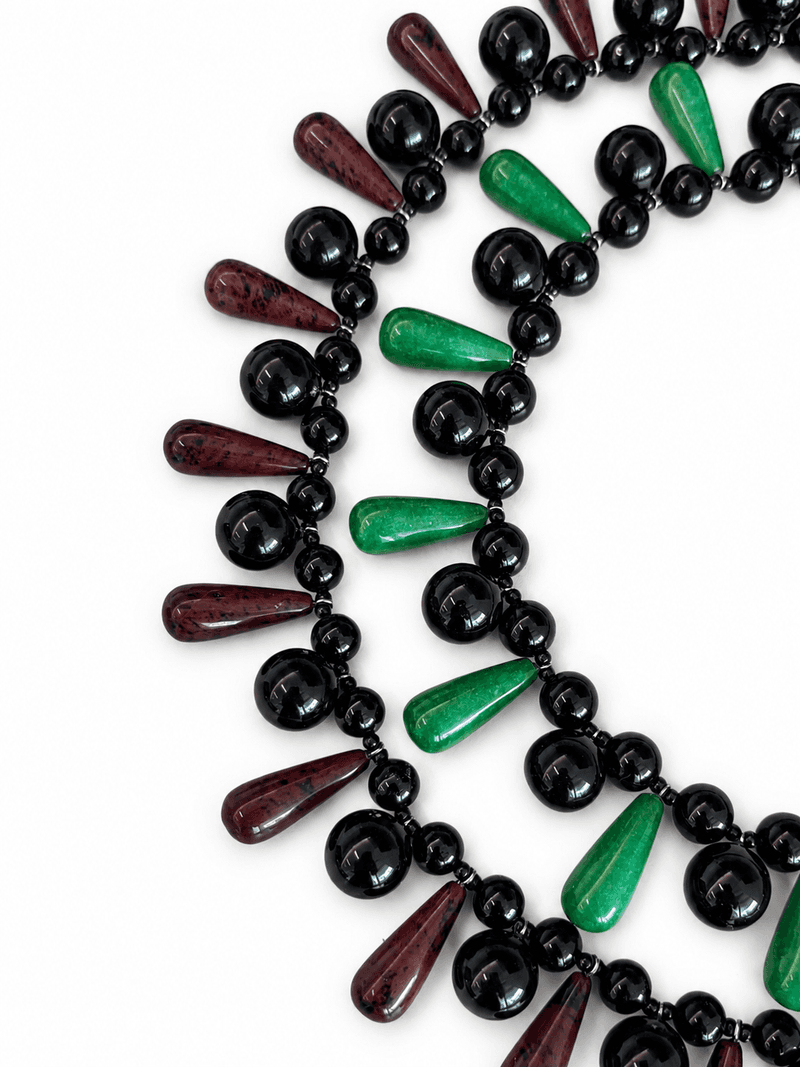
Affiliate link: if you buy through it, Astra Trainer may earn a commission. The price is the same for you.
Photographs courtesy of Aven Atelier.
Check yourselfSolid, even black is not a colour chalcedony usually comes in, yet black onyx is everywhere in modern jewellery. Before reading on: how could a pale stone be made permanently black, rather than just coated on the surface?Show the answerHide the answer
With sugar and acid. The sugar soaks into the stone's pores, the acid chars it to carbon, and the carbon stays in the stone as a permanent black. The method was industrialised in Idar-Oberstein in the nineteenth century and is still standard. Because the colour is carbon inside the stone, it does not wash out, and the chalcedony underneath keeps all its toughness.
Black onyx is almost always dyed
Solid, even black is not a colour chalcedony usually comes in. The black onyx of modern jewellery is, in most cases, grey or pale chalcedony that has been dyed, by the same sugar and acid method described in the agate article on this site. The sugar soaks into the stone's pores, the acid chars it to carbon, and the carbon stays in the stone as a permanent black.
The technique was industrialised in Idar-Oberstein in the nineteenth century, and it is still standard. In practice, black onyx and black agate in modern jewellery are usually the same material, dyed chalcedony, sold under two names.
None of that makes it a poor material. Carbon dyeing is stable and does not wash out, the stone underneath is genuine chalcedony with all its toughness, and the result takes a mirror polish. It is simply worth knowing that the colour was made rather than found.
Not a health or safety instrument. No stone treats any illness, and there is no evidence that onyx or any other mineral has therapeutic effects on physical or mental health conditions. Nothing here is medical advice, and no stone should be used in place of medical care.
The onyx that is not onyx
The word onyx has a second life in the building trade, where it names something else entirely. Onyx marble, sometimes called Mexican onyx or Pakistani onyx, is banded calcite or aragonite: calcium carbonate, the mineral of limestone, formed in caves and around springs. It is translucent, often honey, green or white, and is cut into slabs, bowls and carvings.
It looks like onyx because it is banded. It is not onyx because it is not quartz. The difference matters: onyx marble sits at about 3 on the Mohs scale, soft enough to scratch with a knife, while true onyx sits at around 7.
Onyx marble is also sensitive to acid. Lemon juice, vinegar and many cleaning products will etch its surface, which is why an onyx bowl or countertop can dull where true onyx would be untouched.
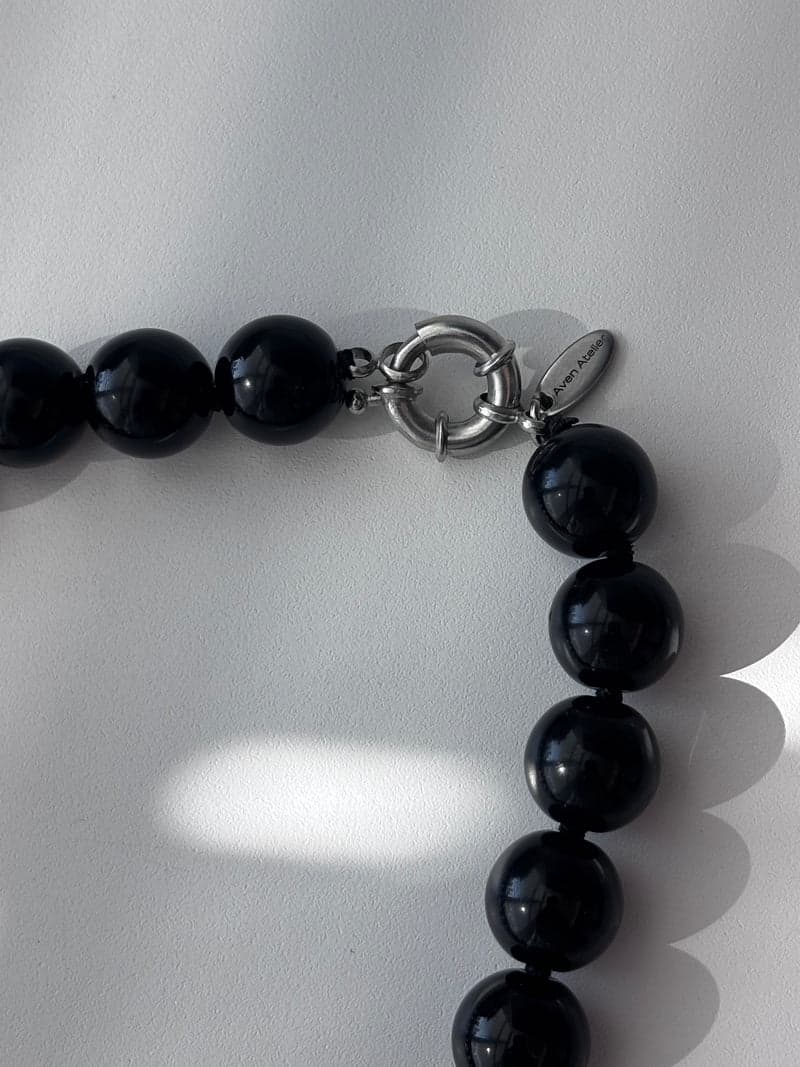

Affiliate link: if you buy through it, Astra Trainer may earn a commission. The price is the same for you.
Photographs courtesy of Aven Atelier.
Telling what you have
| What you see | What it usually means |
|---|---|
| Straight, parallel black and white bands | Onyx in the classical sense |
| Straight red or brown and white bands | Sardonyx |
| Solid, perfectly even black | Dyed chalcedony, sold as black onyx or black agate |
| Translucent honey, green or white bands, scratches with a knife | Onyx marble, a calcite, not true onyx |
| Surface dulled where it touched lemon or vinegar | Onyx marble; true onyx is unaffected |
For jewellery, the question is usually simple: is the black natural or dyed? For solid black, the honest answer is almost always dyed, and a seller who knows will say so without hesitation.
For decorative pieces sold as onyx, the question is whether it is onyx or onyx marble. The knife test answers it, though it is kinder to ask first.
Check a piece of your own that is called onyx
Ticked: 0 of 4
For solid, even black, the honest answer to the second line is almost always dyed, with carbon that sits inside genuine chalcedony and does not wash out. The last two lines are for decorative pieces, since onyx marble is soft and dulls where acid touches it.
What to take from this
Onyx is chalcedony with straight, parallel bands, classically black and white. With red or brown bands it is sardonyx.
The name means fingernail in Greek, and in the ancient world onyx was valued for its layers, carved into cameos such as the Gemma Augustea and into seals.
Modern black onyx is almost always dyed chalcedony, the same material often sold as black agate, and onyx marble is a soft calcite that shares only the name.
Which is why the onyx meaning worth keeping is not strength or protection. It is that a word once reserved for a stone of carefully stacked colours now names a stone of no layers at all, and that the history of a single word can tell you more about the gem trade than any list of properties.
Test yourself
Question 1 of 3
In the classical sense, what does the word onyx strictly name?
What is onyx?
Onyx is chalcedony, a fine-grained form of quartz, with straight parallel bands of contrasting colour, classically black and white. When the bands are red or brown and white it is called sardonyx. It sits at around 6.5 to 7 on the Mohs scale.
What does the word onyx mean?
It comes from the Greek onyx, meaning fingernail or claw, most likely because the paler layered varieties resemble a fingernail over the skin beneath. The same root survives in medical words for the nails.
Is black onyx natural?
Rarely. Solid, even black is not a colour chalcedony usually has, and most black onyx is chalcedony dyed with sugar and acid, which leaves permanent carbon in the stone. The same material is often sold as black agate.
What was onyx used for in the ancient world?
Its straight layers made it ideal for cameos, where a figure is carved in one colour against a background of another. The Gemma Augustea in Vienna and the Great Cameo of France are carved from onyx and sardonyx, and sardonyx was prized for seal rings.
Is onyx marble the same as onyx?
No. Onyx marble, also sold as Mexican onyx, is banded calcite or aragonite. It is much softer, at about 3 on the Mohs scale, and can be etched by lemon juice or vinegar, which do not affect true onyx.
Where this leads. Crystal Meanings and Their Origins, Traced does for the whole list what this article does for one stone: it follows the modern meanings back to the people who wrote them down, and finds them younger than expected.