The sodalite meaning in most crystal books is logic, clarity and calm communication, usually tied to its deep blue. The name has a far plainer origin. The chemist who described it in 1811 named it for the amount of soda it contained, more than any mineral he had seen. It is one of the few stones in the crystal shop named for a chemistry result.
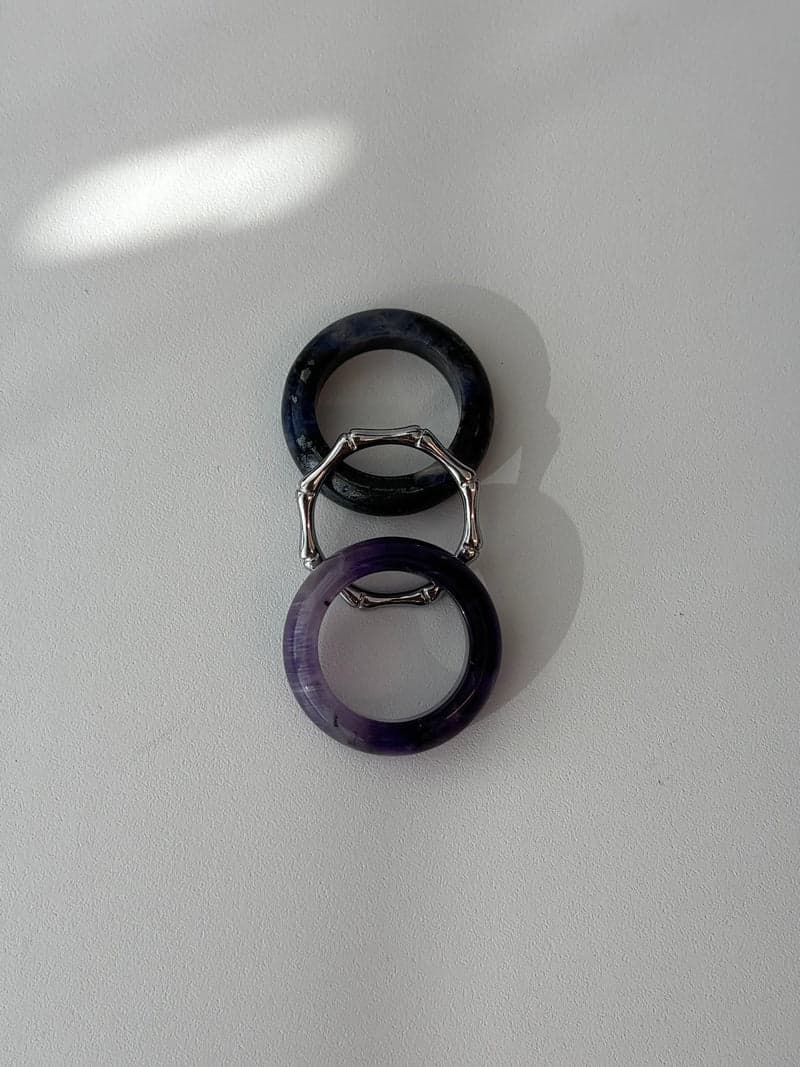
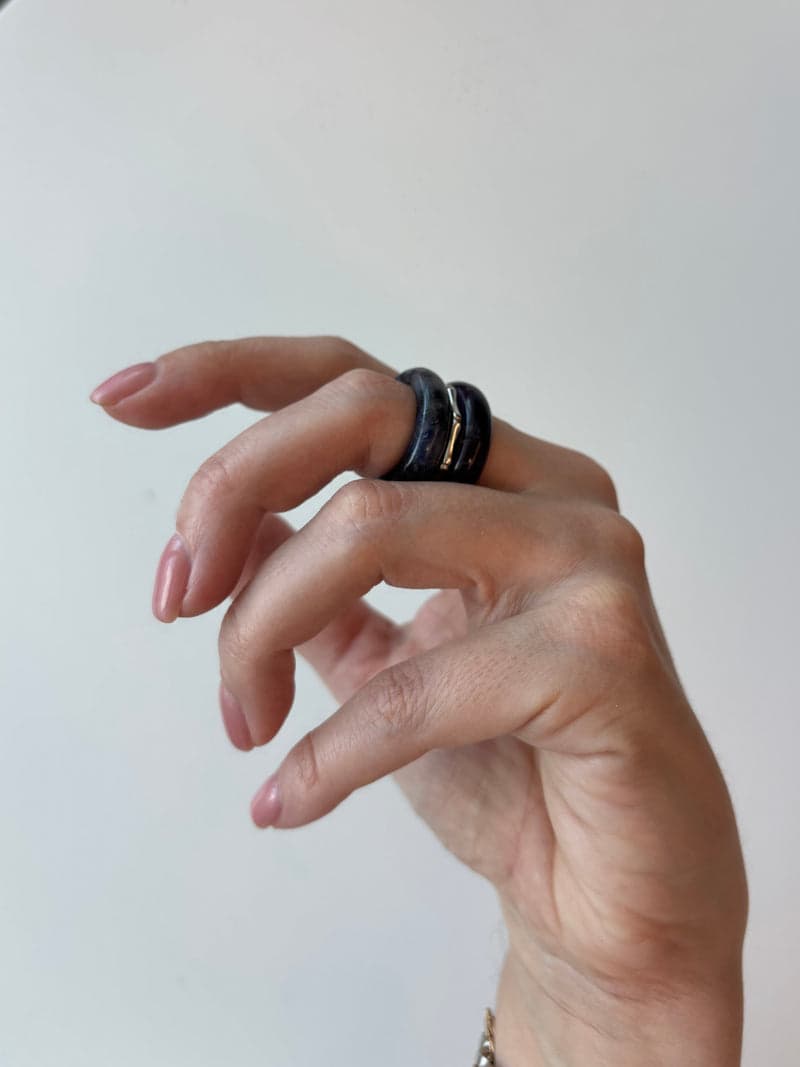
Affiliate link: if you buy through it, Astra Trainer may earn a commission. The price is the same for you.
Photographs courtesy of Aven Atelier.
What sodalite actually is
Sodalite is a sodium aluminium silicate that also contains chlorine, which is unusual. It belongs to a family called the feldspathoids: minerals that form in place of feldspar when the rock around them does not contain enough silica to make feldspar and quartz.
That last point sets it apart from almost every stone earlier in this series. Agate, jasper, aventurine and amethyst are all quartz in one form or another. Sodalite forms in silica-poor rocks, typically nepheline syenite, where quartz is absent. You will not find the two growing together.
It is also softer. Sodalite sits at about 5.5 to 6 on the Mohs scale, against quartz at 7. That is hard enough for beads, rings and pendants, but it scratches more easily than the other stones here, which is worth knowing when it comes to wearing it.
Named for its sodium
The mineral was collected in southern Greenland by Carl Ludwig Giesecke during an expedition he began in 1806, in the Ilímaussaq complex, one of the most mineral-rich places on earth. The specimens reached the Scottish chemist Thomas Thomson, who analysed them and published in 1811.
Thomson named it sodalite in allusion to its sodium content, noting that no mineral yet found contained nearly so much soda. Soda was then the ordinary name for sodium compounds, so the name is less a description of the stone's appearance than a line from a laboratory notebook.
There is a quiet irony in that. Most of the stones in this series carry names given by traders and poets, for colour, place or legend. Sodalite's name was given by a chemist, for chemistry, and the modern meanings attached to it all come from its colour, which the name does not mention.
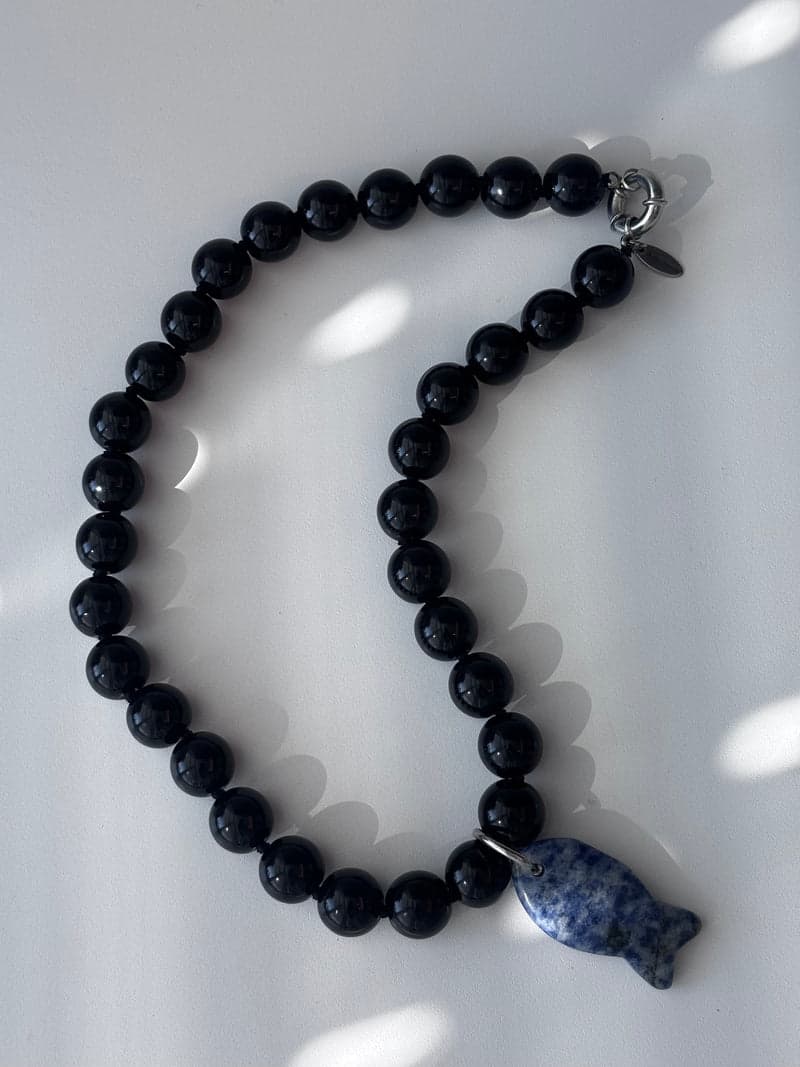

Affiliate link: if you buy through it, Astra Trainer may earn a commission. The price is the same for you.
Photographs courtesy of Aven Atelier.
Check yourselfMost sodalite is mottled or veined with white. Before reading on: given the kind of rock sodalite forms in, what do you think the white actually is?Show the answerHide the answer
Usually other minerals from the same rock: calcite, or the nepheline the sodalite grew among, caught up in the blue. That makes the patches worth looking at rather than past. They are the most reliable everyday sign that a blue stone is sodalite, and one of the main ways to tell it from lapis lazuli.
The white in the blue
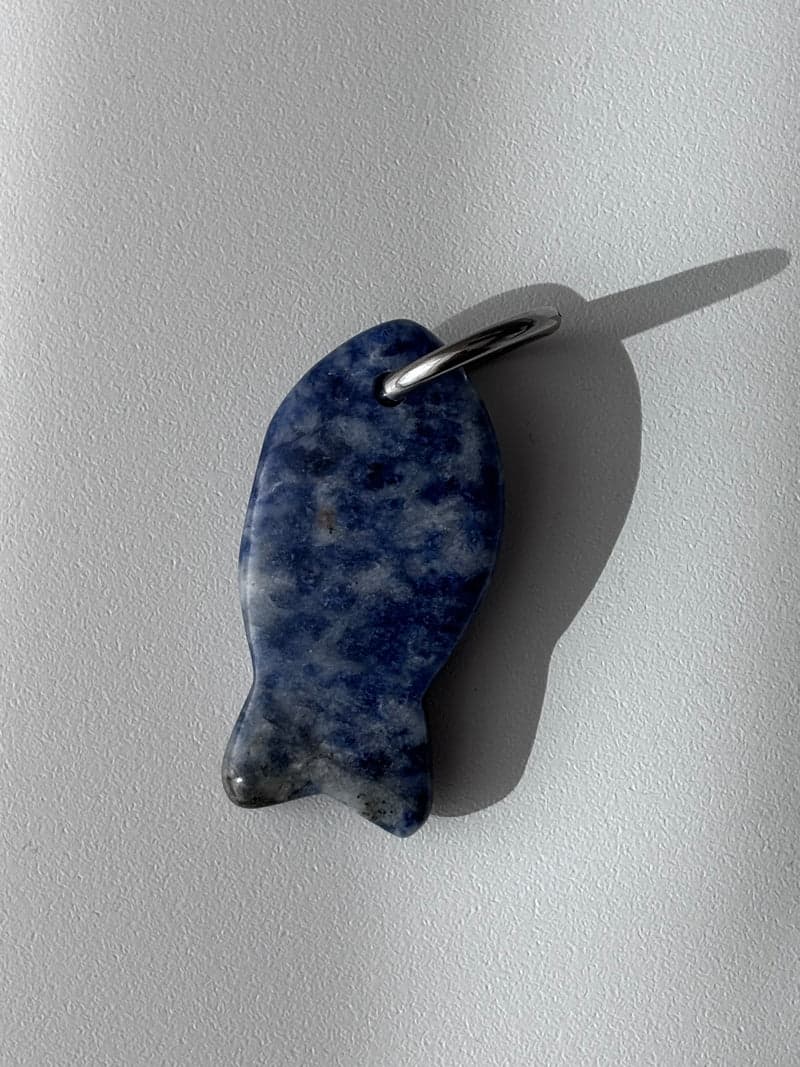
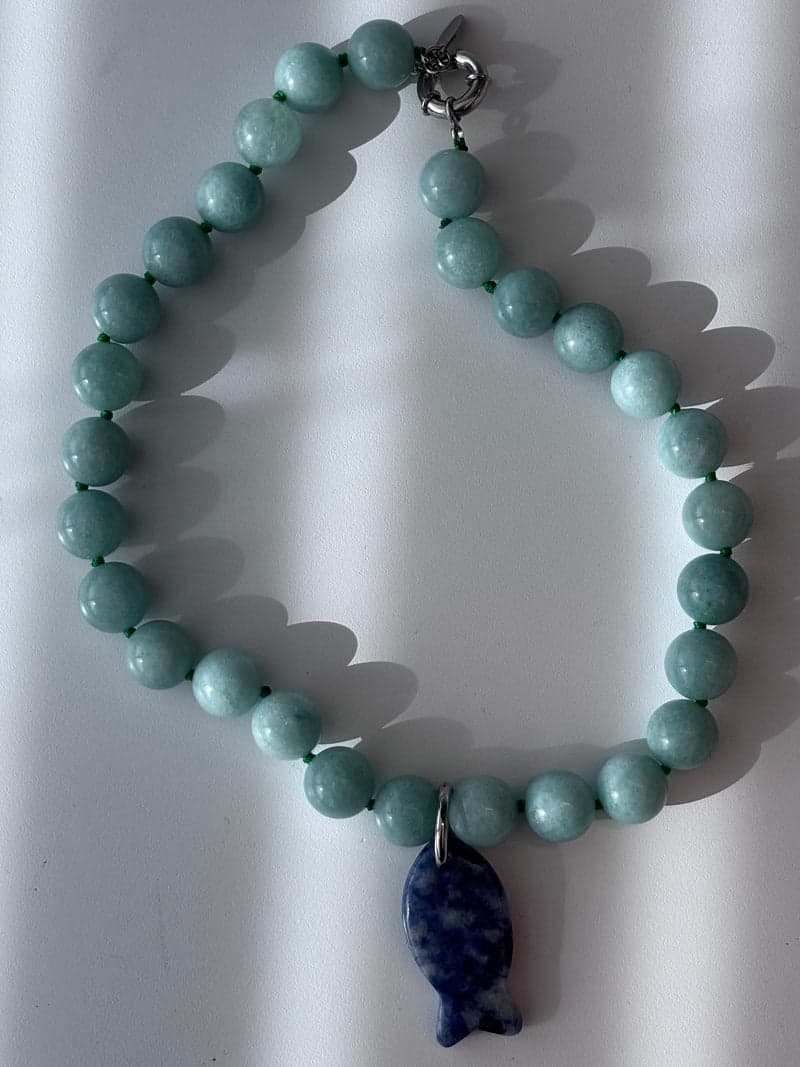
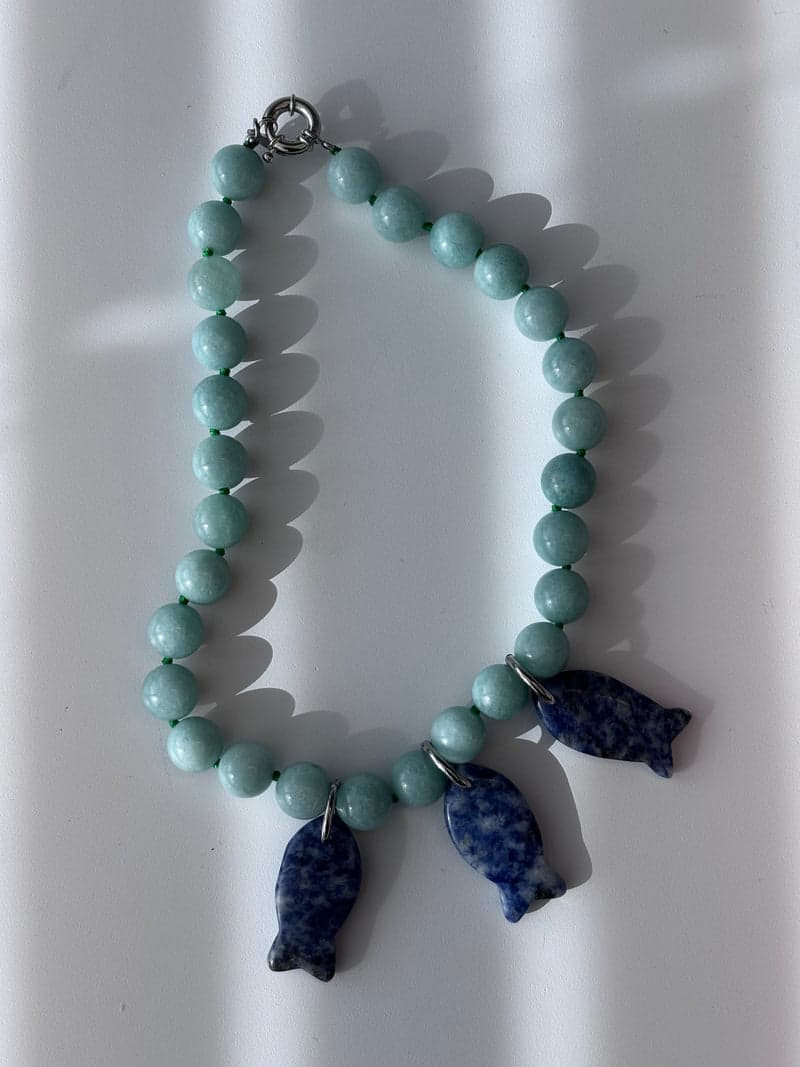
Sodalite is rarely a single even blue. Most pieces are mottled or veined with white, and sometimes grey or pale yellow. The white is usually other minerals from the same rock, calcite or the nepheline it grew among, caught up in the blue.
Those patches are worth looking at rather than past. They are the most reliable everyday sign that a blue stone is sodalite, and they are one of the main ways to tell it from the stone it is most often confused with.
The blue itself ranges from a soft, greyish denim to a deep royal blue. In polished pieces the contrast between the blue and the white veins gives sodalite its look: less like a gem, more like a small piece of a landscape.
Bancroft, and a royal house
The best-known sodalite deposit in North America is near Bancroft, Ontario. It was found in 1892, and in 1901 a piece was presented to the future Queen Mary, then touring North America. Accounts differ on the occasion, but agree on what followed: she admired it enough that arrangements were made to quarry more to decorate Marlborough House in London.
In 1906 about 130 tons of Bancroft rock were quarried and shipped to England for the purpose. The quarry was named the Princess Sodalite Mine after her, and it still operates, now mostly as a place where visitors can collect their own pieces.
Bancroft sodalite is also known for glowing orange under ultraviolet light, which is one reason collectors still bring UV torches to the quarry. That glow belongs to the same family of effects as the colour change described below.
Affiliate link: if you buy through it, Astra Trainer may earn a commission. The price is the same for you.
Photographs courtesy of Aven Atelier.
Sodalite and lapis lazuli
The stone sodalite is most often confused with, and sometimes sold as, is lapis lazuli. The confusion is understandable, and not only because both are blue. Lapis lazuli is a rock, and its blue comes from a mineral called lazurite, which belongs to the sodalite group itself. The two are chemical cousins.
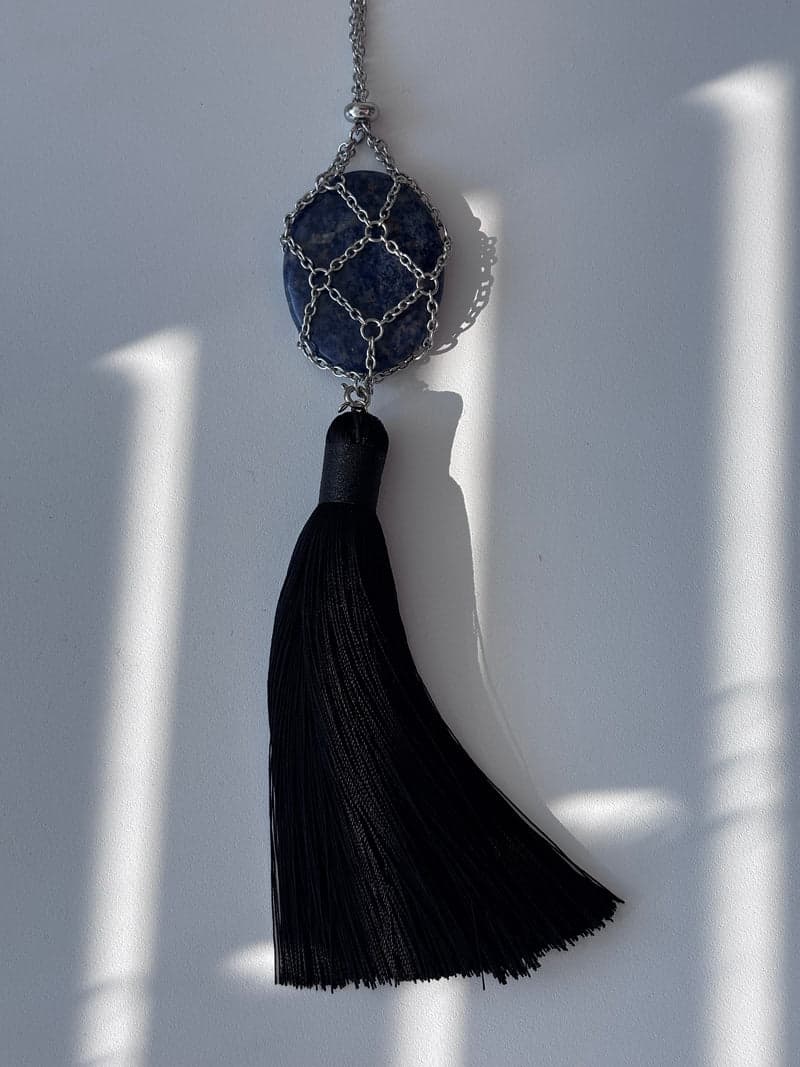
They are still easy to tell apart once you know what to look for. Lapis lazuli usually carries tiny golden flecks of pyrite, which sodalite almost never has. Lapis is typically a deeper, more even ultramarine, while sodalite is more mottled and carries broader white veins. And if a piece can be rubbed on unglazed porcelain, lapis leaves a light blue streak where sodalite leaves a white one.
For most of history lapis lazuli was the more prized of the two, the source of the ultramarine pigment painters paid more for than gold. Sodalite has never been valued that way, so when the two are mixed up, it is usually sodalite being sold as lapis rather than the other way round.
Not a health or safety instrument. No stone treats any illness, and there is no evidence that sodalite or any other mineral has therapeutic effects on physical or mental health conditions. Nothing here is medical advice, and no stone should be used in place of medical care.
The sodalite that changes colour
One variety of sodalite does something that looks like a trick. Hackmanite, as it is called, changes colour in response to ultraviolet light: exposed to UV, it deepens to pink or violet, and in ordinary light it fades again. The effect is called tenebrescence.
It is caused by defects in the crystal that trap electrons when UV light strikes them and release them again over time. The colour change is temporary and repeatable, and a single piece can be switched back and forth many times. Most hackmanite also fluoresces strongly, glowing orange under a UV lamp.
Ordinary blue jewellery sodalite does not change colour in daylight, but the effect is a reminder that the family is more physically interesting than its reputation as a plain blue stone suggests.

Affiliate link: if you buy through it, Astra Trainer may earn a commission. The price is the same for you.
Photographs courtesy of Aven Atelier.
Caring for a softer stone
Because sodalite is softer than quartz, and because ordinary household dust contains quartz, a sodalite piece can dull or scratch over time in a way an agate will not. The fix is simple: store it apart from harder stones and metal, rather than loose in a box with everything else.
Sodalite also has a weak cleavage, planes along which it can split if struck sharply. It is not fragile in normal wear, but a hard knock against stone or tile is more likely to chip it than it would a quartz. Rings take the most knocks, so they are worth taking off for heavy work.
Clean it with a soft cloth and plain water. Harsh cleaners and ultrasonic machines are best avoided, as they are for most stones that are softer than quartz.
Check how you keep your own sodalite
Ticked: 0 of 4
Sodalite is not fragile in normal wear. These habits follow from two facts in the article: it is softer than quartz, which ordinary household dust contains, and it has a weak cleavage that a sharp knock can find.
Telling what you have
| What you see | What it usually means |
|---|---|
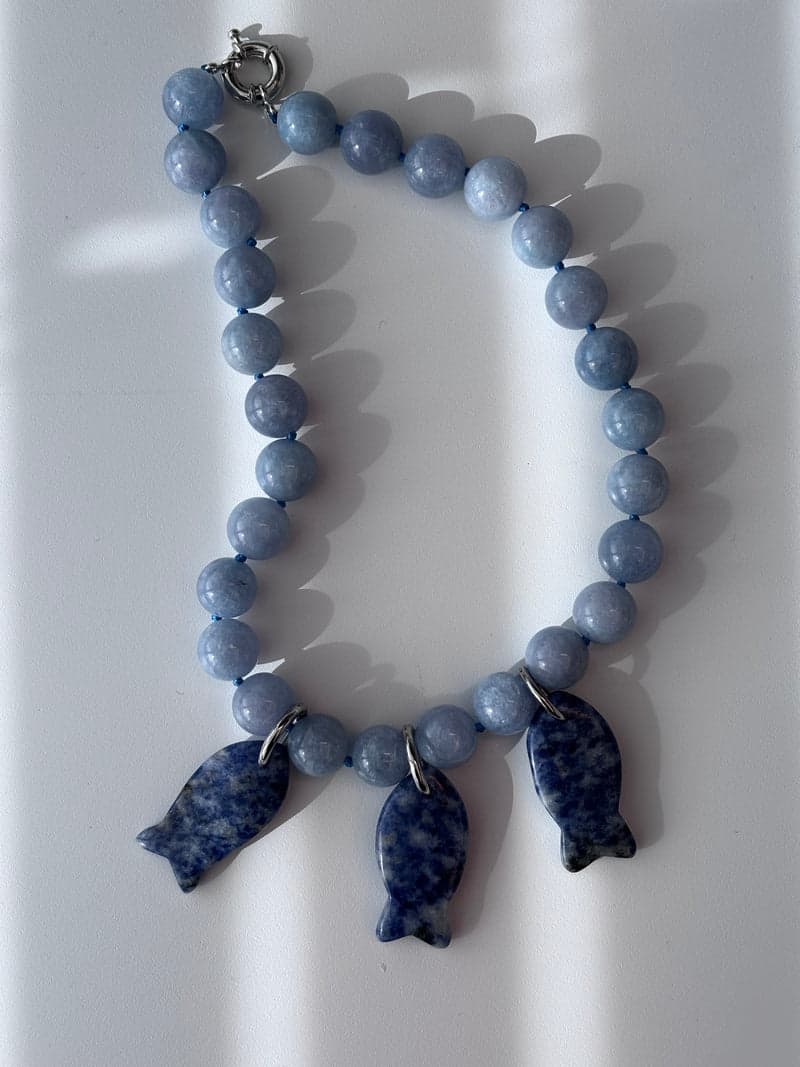
| Mottled blue with broad white veins, no gold flecks | Sodalite |
| Deep, even ultramarine with small gold flecks | Lapis lazuli |
| Blue stone that leaves a white streak on porcelain | Sodalite; lapis leaves a light blue streak |
| Glows orange under a UV torch | Sodalite, often from Bancroft or Greenland |
| Turns pink under UV and fades again in daylight | Hackmanite, the colour-changing variety |
The gold flecks are the quickest single test. If a blue stone sold as lapis lazuli has none at all, and broad white veins instead, it is worth asking the seller whether it is sodalite.
Either stone is a perfectly good thing to own. The only problem is paying lapis prices for sodalite, and a seller who knows the difference will be happy to tell you which you have.
Affiliate link: if you buy through it, Astra Trainer may earn a commission. The price is the same for you.
Photographs courtesy of Aven Atelier.
What to take from this
Sodalite is a feldspathoid, a sodium aluminium silicate with chlorine, formed in silica-poor rocks where quartz does not grow. It is softer than the quartz stones in this series.
It was collected in Greenland and named in 1811 by the chemist Thomas Thomson for its unusually high sodium content.
Its white veining is its most reliable signature, and the easiest way to tell it from lapis lazuli, whose blue comes from a mineral in the same family.
Which is why the sodalite meaning worth keeping is not a list of properties. It is that a stone named for a laboratory result turned out to decorate a royal house, glow in ultraviolet light, and sit one mineral away from the most expensive blue pigment in history.
Test yourself
Question 1 of 3
The article calls the origin of sodalite's name a quiet irony. What is ironic about it?
What is sodalite made of?
Sodalite is a sodium aluminium silicate that also contains chlorine. It is a feldspathoid, a mineral that forms in silica-poor rocks such as nepheline syenite, where quartz does not grow. It sits at about 5.5 to 6 on the Mohs scale, softer than quartz.
Why is it called sodalite?
The Scottish chemist Thomas Thomson named it in 1811, after analysing specimens collected in Greenland. He chose the name for its sodium content, noting that no mineral then known contained nearly so much soda.
How can I tell sodalite from lapis lazuli?
Lapis lazuli usually has small gold flecks of pyrite and a deeper, more even blue. Sodalite rarely has pyrite and shows broader white veins. On unglazed porcelain lapis leaves a light blue streak and sodalite a white one.
What is hackmanite?
Hackmanite is a variety of sodalite that changes colour under ultraviolet light, deepening to pink or violet and then fading again in ordinary light. The effect is called tenebrescence. Most hackmanite also glows orange under a UV lamp.
Is sodalite durable enough for everyday jewellery?
Yes, with some care. It is softer than quartz and has a weak cleavage, so it can scratch or chip more easily than agate or amethyst. Store it apart from harder stones, take rings off for heavy work, and clean it with a soft cloth and water.
Where this leads. Crystal Meanings and Their Origins, Traced does for the whole list what this article does for one stone: it follows the modern meanings back to the people who wrote them down, and finds them younger than expected.