The clear quartz meaning in most crystal books is amplification: the master stone that strengthens intention and every other crystal near it. The history is stranger and more concrete. For more than a thousand years, educated people believed clear quartz was ice frozen so hard it could never melt. And in the twentieth century, the same mineral quietly became the thing that keeps almost every clock and phone on earth on time.

Affiliate link: if you buy through it, Astra Trainer may earn a commission. The price is the same for you.
Photographs courtesy of Aven Atelier.
What quartz actually is
Quartz is silicon dioxide, silicon and oxygen, and it is one of the most common minerals on the planet. It makes up much of the sand on beaches and is a major part of granite and sandstone. Only the feldspars are more abundant in the continental crust.
Pure quartz is colourless. When it grows slowly in open space, in cavities, veins or pockets, it forms six-sided crystals with pointed ends, the classic shape of a crystal in any shop. Transparent, colourless quartz of that kind is called rock crystal, and it is what the trade now sells as clear quartz.
It sits at 7 on the Mohs scale and has no easy cleavage, so it resists scratching and breaks with a curved, glassy fracture rather than splitting cleanly. That combination of hardness and clarity is why it has been carved into vessels, seals and spheres for thousands of years.
The ice that never melted
The word crystal comes from the Greek krystallos, which meant ice. Ancient writers applied it to clear quartz because they believed that is what it was. Pliny the Elder, writing in the first century, described rock crystal as a substance that takes solid form through excessive cold, found in places where winter snow freezes hardest.
The idea was reasonable for its time. Rock crystal is clear and cold to the touch, and it was often found high in the Alps. It lasted for centuries, and it survives in the language. Every time anyone calls something crystal clear, they are repeating a Roman theory of frozen water.
The theory is wrong in every detail. Quartz contains no water in its structure, forms at temperatures far above freezing, and grows from hot, silica-rich fluids deep in rock. But few scientific mistakes have left a deeper mark on everyday speech.
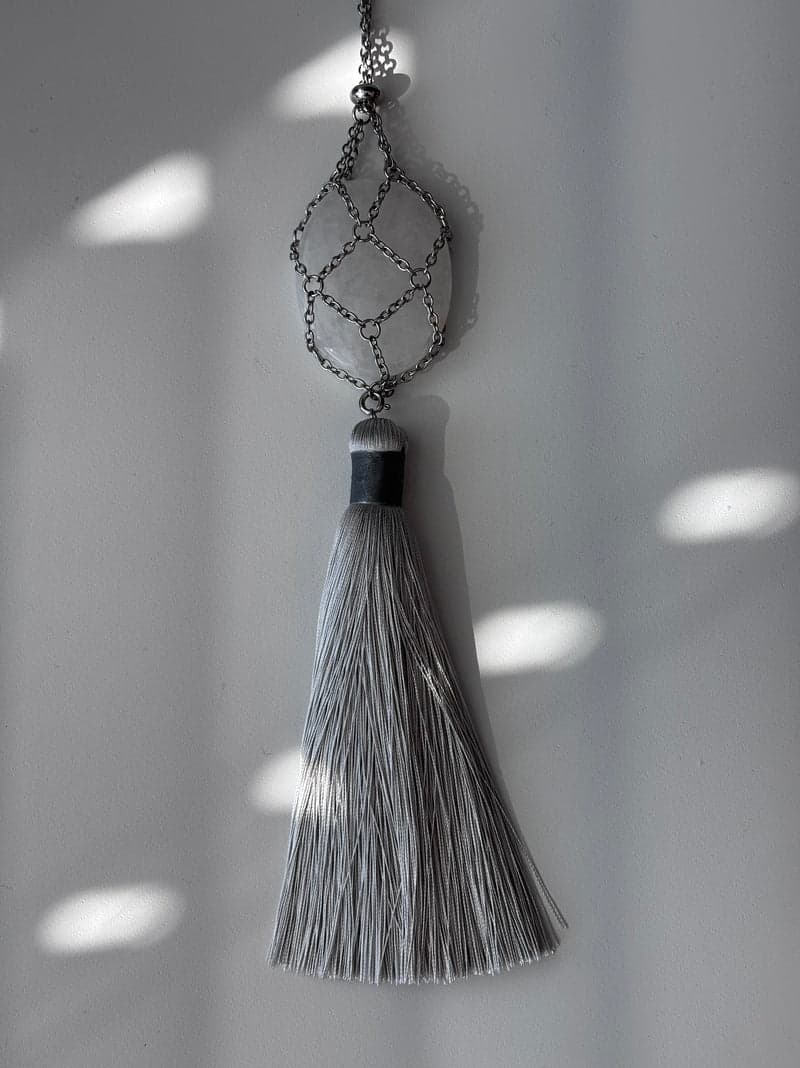
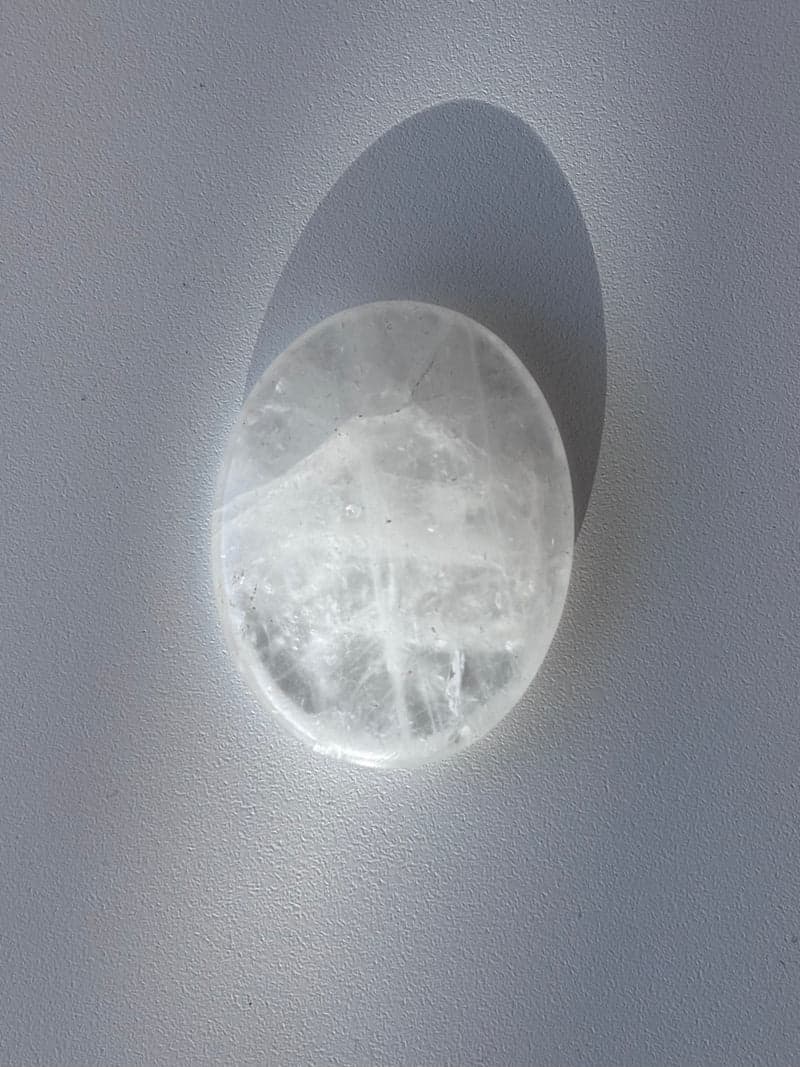
Affiliate link: if you buy through it, Astra Trainer may earn a commission. The price is the same for you.
Photographs courtesy of Aven Atelier.
Clear, milky and everything between
Perfectly transparent quartz is the exception. Much more quartz is cloudy or white, and it is called milky quartz. The whiteness is not a pigment. It comes from countless microscopic cavities filled with fluid or gas, trapped inside the crystal as it grew. Each one scatters a little light, and together they turn the stone white.
Between the two are the pieces most people actually own: mostly clear, with veils, wisps and feathers inside. Those inclusions are a record of the conditions the crystal grew in, and they are also one of the simplest signs that a stone is natural rather than glass.
Flawless, water-clear rock crystal in large sizes has always been the most prized. It is also the kind most worth checking, because it is exactly what a glass imitation looks like.
One mineral, many names
Quartz is the thread running through most of this series. Amethyst is quartz coloured by iron and natural radiation. Citrine is quartz, usually heated amethyst. Aventurine is a rock made of quartz grains. Agate and jasper are quartz in fibres too fine to see. The names are different because the stones look different, but the mineral underneath is the same.
Strawberry quartz is another member: clear or pale quartz full of tiny red and pink inclusions, usually iron minerals such as hematite and lepidocrocite, that give it a speckled, berry-like look. Natural material is uneven and unpredictable. Much of what is sold under the name is glass with red flecks mixed in, which tends to look too regular.
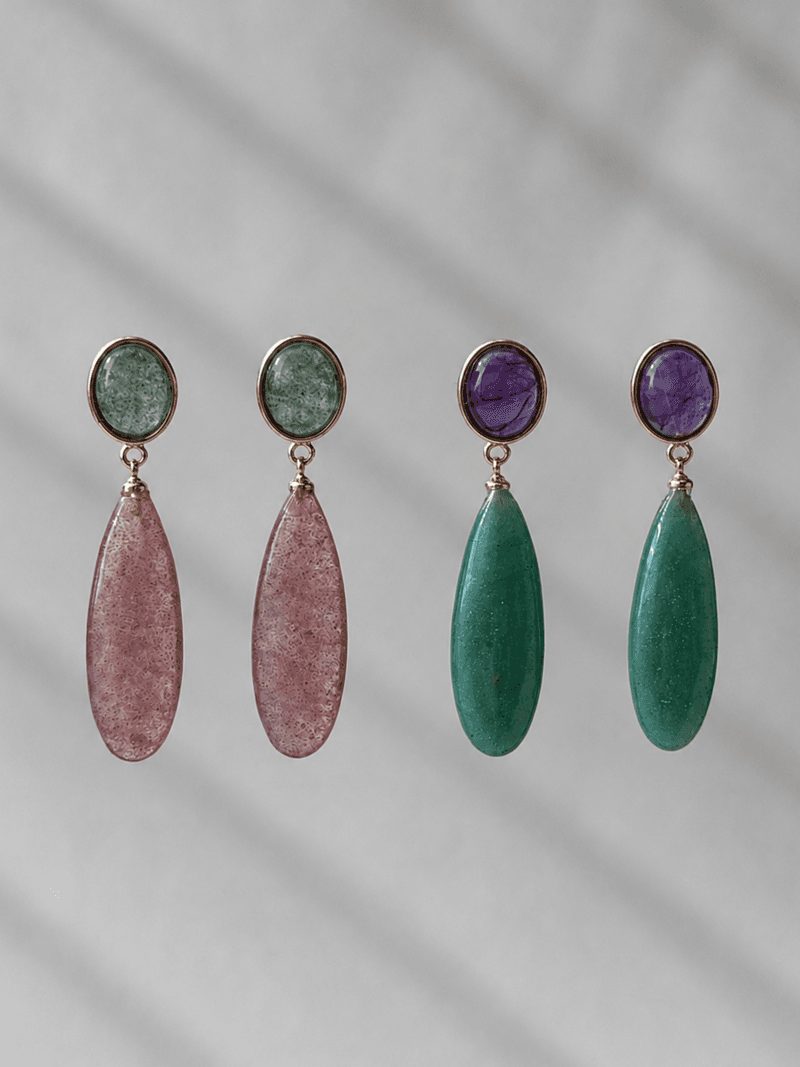
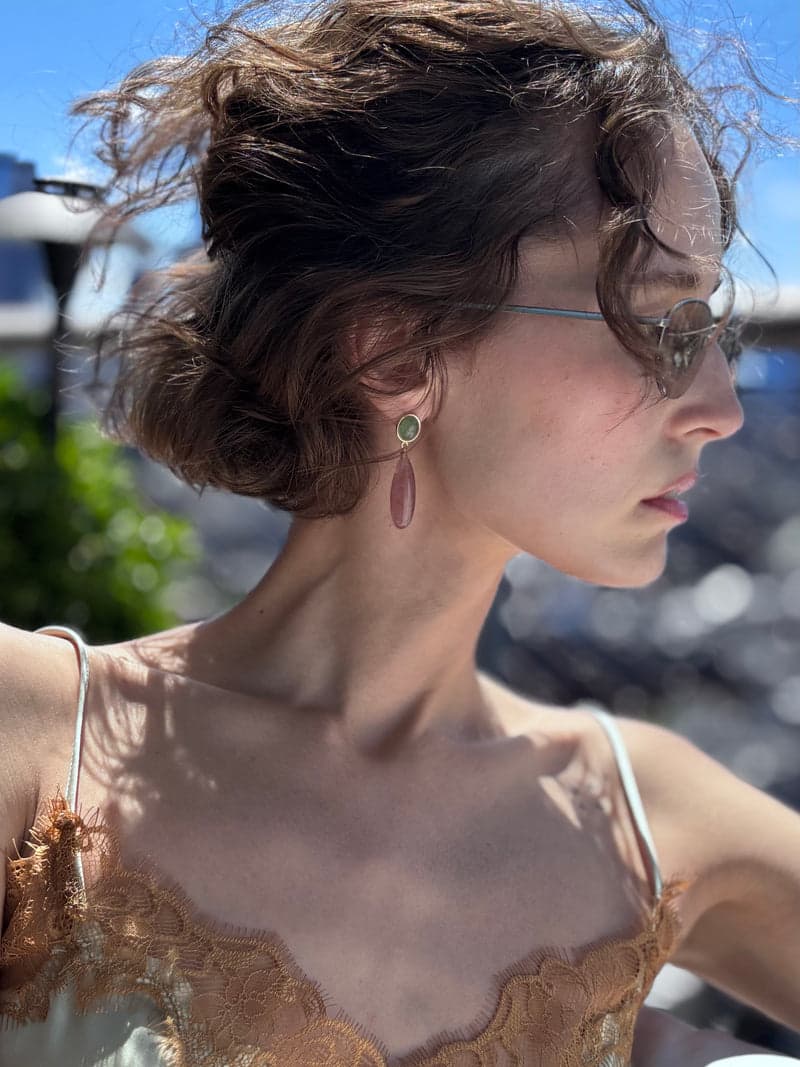
Affiliate link: if you buy through it, Astra Trainer may earn a commission. The price is the same for you.
Photographs courtesy of Aven Atelier.
Check yourselfPolished spheres of rock crystal were used for scrying, gazing into them in the hope of seeing visions. Before reading on: what about a clear quartz sphere would lead people to report seeing shapes in it?Show the answerHide the answer
The sphere's optics, and the eye. A clear sphere inverts and bends whatever is behind it, and the inclusions inside catch the light in shifting ways. Stare long enough and the eye starts to find shapes, which is exactly what scryers reported. The article treats that as a belief whose history is worth knowing, even though the belief itself does not hold up.
Crystal balls and the habit of looking in
Polished spheres of rock crystal were used for scrying, the practice of gazing into a clear or reflective surface in the hope of seeing visions, from the medieval period onward. The crystal ball of popular imagination is a quartz sphere, although many later ones were glass.
The appeal is easy to understand. A clear sphere inverts and bends whatever is behind it, and the inclusions inside catch the light in shifting ways. Stare long enough and the eye starts to find shapes, which is exactly what scryers reported.
Northcote Thomas, the anthropologist whose 1905 survey of the practice is in the Astra Trainer library, collected accounts of crystal gazing across many cultures without claiming any of them were true. His book is a good reminder that the history of a belief is worth knowing even when the belief itself does not hold up.
Not a health or safety instrument. No stone treats any illness, and there is no evidence that quartz or any other mineral has therapeutic effects on physical or mental health conditions, or amplifies anything other than an electrical signal. Nothing here is medical advice, and no stone should be used in place of medical care.
The stone that keeps time
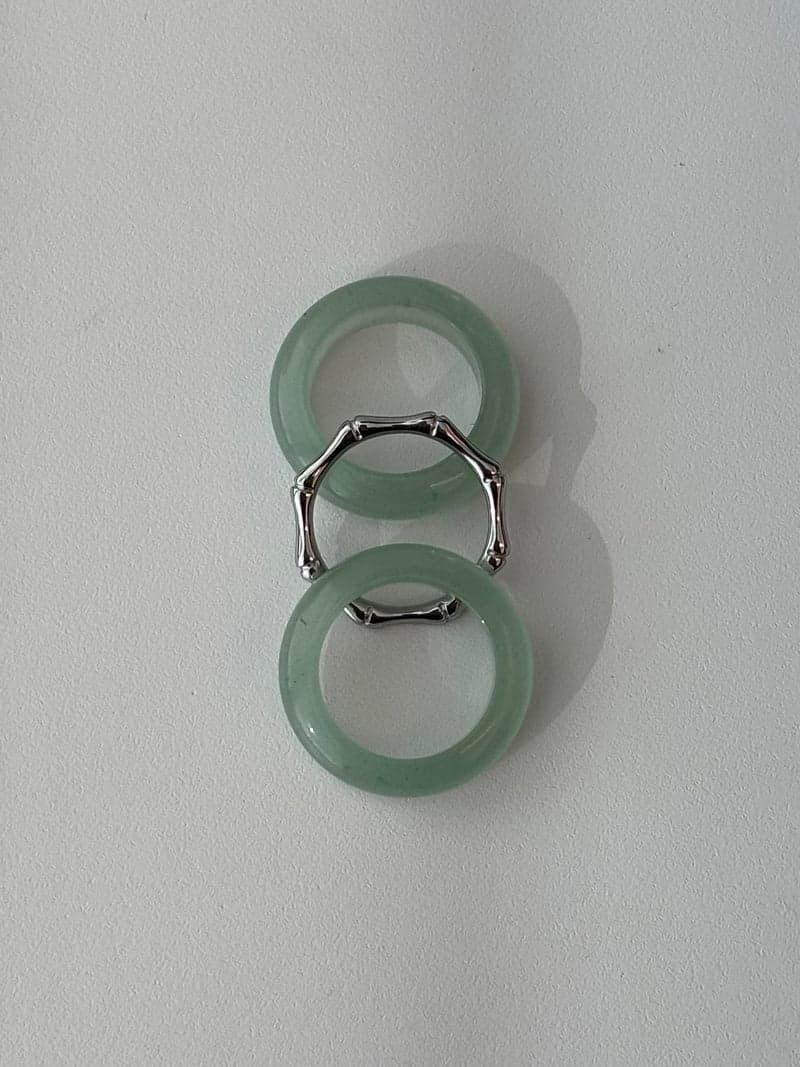
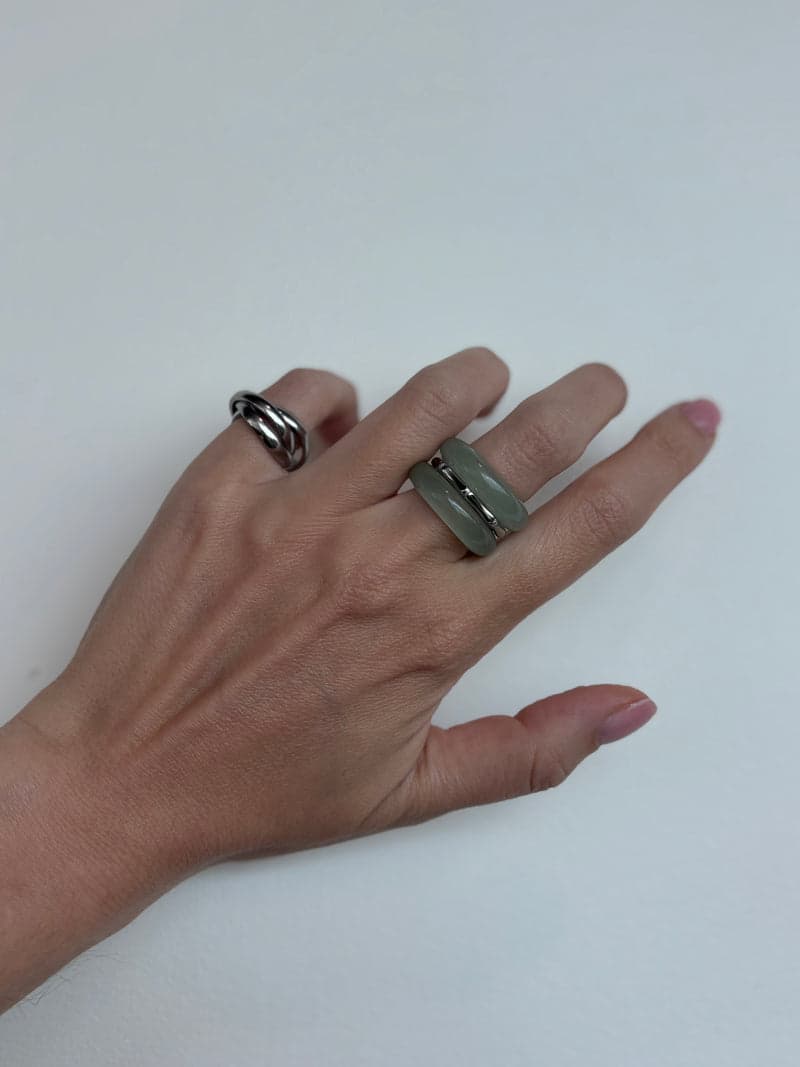
Quartz does have one genuinely remarkable property, and it is measurable. In 1880 the brothers Pierre and Jacques Curie showed that squeezing certain crystals, quartz among them, produces a small electrical charge. The reverse is also true: apply a voltage, and the crystal flexes very slightly. The effect is called piezoelectricity.
Affiliate link: if you buy through it, Astra Trainer may earn a commission. The price is the same for you.
Photographs courtesy of Aven Atelier.
Cut to the right shape, a quartz crystal driven by a voltage vibrates at an extremely steady frequency. In 1927 Warren Marrison at Bell Labs used that to build the first quartz clock, far more accurate than any mechanical clock of its day. In 1969 Seiko released the Astron, the first quartz wristwatch, accurate to about five seconds a month.
Today a sliver of quartz sits inside almost every watch, phone and computer, counting time. Most of it is not mined. It is grown in factories under heat and pressure, because the demand is enormous and grown crystal is purer. If the modern claim is that quartz amplifies, the accurate version is that it keeps time, and it does so in nearly every device you own.
Dyed, glass and grown
Because quartz is so common and so easy to imitate, it is worth knowing the three ways a stone sold as quartz may not be quite what it seems.
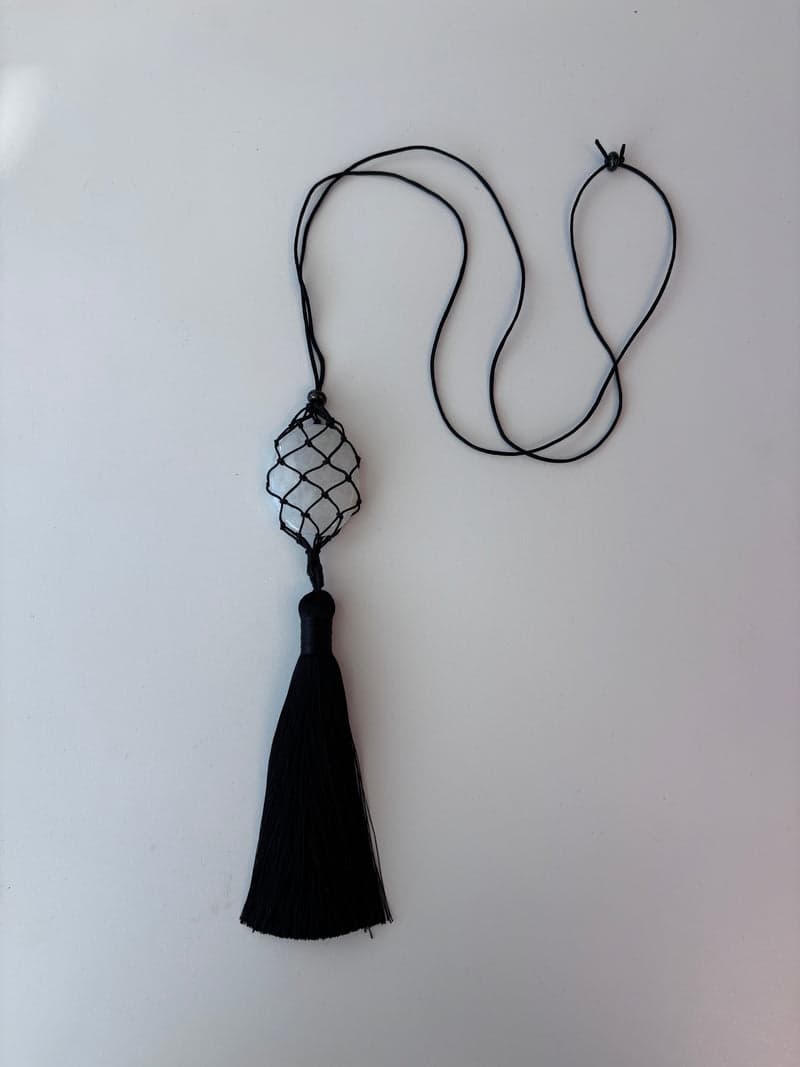
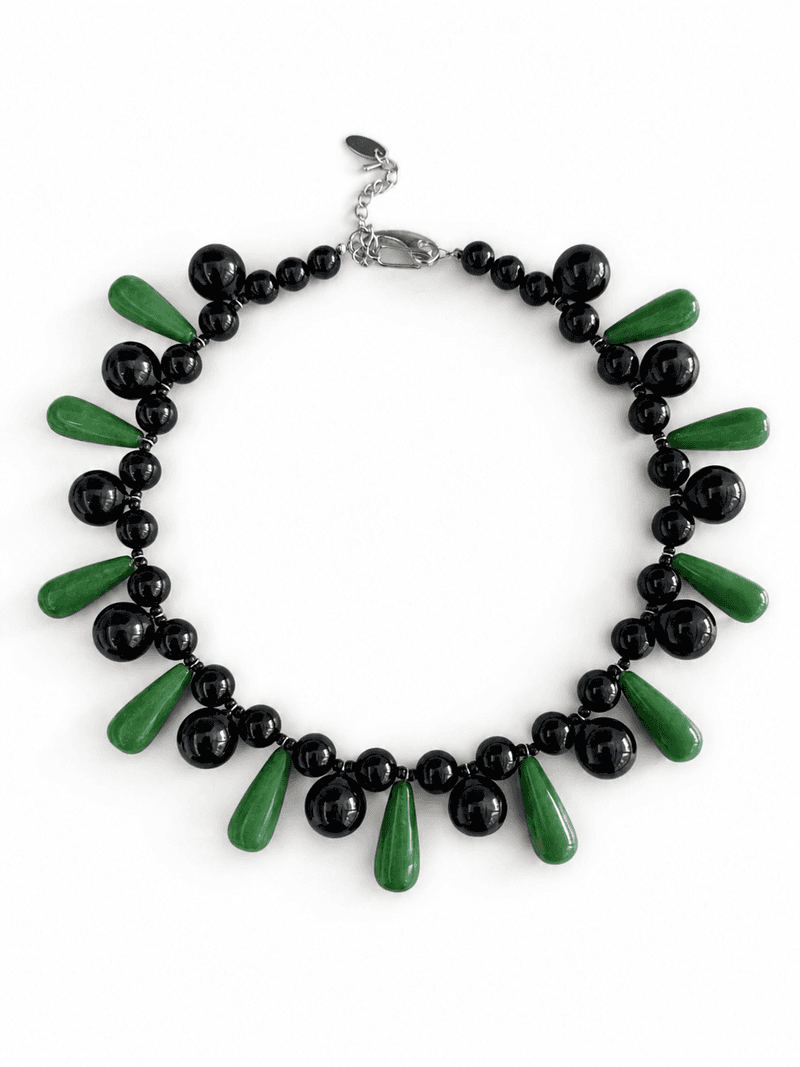
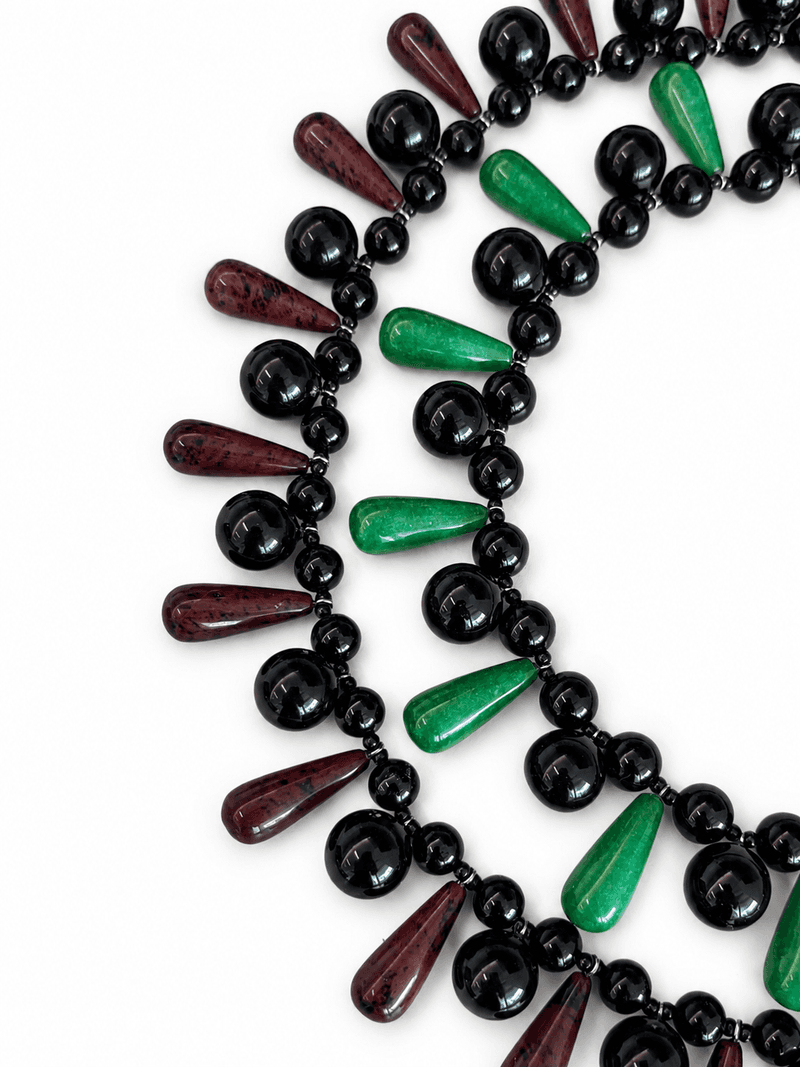
The first is dye. Quartzite, the rock made of packed quartz grains, can be dyed almost any colour. It is a legitimate material and a long-established practice, and honest sellers say so. The necklace below is described by its maker as dyed green quartzite, which is exactly the kind of plain description worth looking for.
The second is glass. Glass is softer than quartz, often contains round gas bubbles, and warms up quickly in the hand, where quartz stays cool for longer. The third is grown quartz, which is chemically identical to natural and mainly a question for large, flawless stones sold at a premium.
Affiliate link: if you buy through it, Astra Trainer may earn a commission. The price is the same for you.
Photographs courtesy of Aven Atelier.
Telling what you have
| What you see | What it usually means |
|---|---|
| Clear, with small veils or wisps inside | Natural rock crystal |
| White and cloudy all through | Milky quartz, full of tiny fluid inclusions |
| Round bubbles, warms quickly in the hand | Probably glass |
| Even, bright colour in a grainy stone | Often dyed quartzite; ask the seller |
| Red flecks spread with perfect regularity | Likely glass sold as strawberry quartz |
The cool touch is the easiest home test. Hold the piece in your palm for half a minute. Quartz conducts heat away from the skin better than glass and stays noticeably cool; glass soon feels the same temperature as your hand.
For anything expensive and flawless, the question to ask the seller is simple: natural, grown or glass? Clear quartz is inexpensive enough that the answer should come easily.
Try it on a piece of quartz you own
Ticked: 0 of 4
Veils inside and a cool touch point to natural rock crystal; round bubbles and a stone that soon matches the warmth of your hand point to glass. Grown quartz is chemically identical to natural, which is why the last line matters most for a large, flawless piece.
What to take from this
Quartz is silicon dioxide, one of the most common minerals on earth, and clear quartz is its transparent, colourless form, known as rock crystal.
The word crystal comes from the Greek for ice, because ancient writers, Pliny among them, believed rock crystal was ice frozen too hard to melt.
Amethyst, citrine, aventurine, agate, jasper and strawberry quartz are all forms of the same mineral.
Which is why the clear quartz meaning worth keeping is not amplification. It is that a stone once mistaken for ice turned out to vibrate so steadily that it now keeps time for most of the world, which is a more remarkable property than anything the crystal books claim for it.
Test yourself
Question 1 of 3
Under what conditions does quartz form six-sided crystals with pointed ends, the classic crystal shape?
What is clear quartz?
Clear quartz, also called rock crystal, is transparent, colourless silicon dioxide, one of the most common minerals on earth. It grows as six-sided pointed crystals in cavities and veins, and sits at 7 on the Mohs scale.
Why is it called crystal?
The word comes from the Greek krystallos, meaning ice. Ancient writers, including Pliny the Elder, believed rock crystal was ice frozen so hard it could never melt. The idea was wrong, but it survives in phrases such as crystal clear.
Why is some quartz white instead of clear?
Milky quartz is full of microscopic cavities holding fluid or gas, trapped as the crystal grew. Each one scatters a little light, and together they make the stone cloudy or white.
Why is quartz used in watches?
Quartz is piezoelectric, a property shown by Pierre and Jacques Curie in 1880. A shaped quartz crystal vibrates at a very steady frequency when driven by a voltage, which made the first quartz clock possible in 1927 and the first quartz wristwatch in 1969.
How can I tell quartz from glass?
Quartz usually has small natural veils or wisps inside, while glass may show round gas bubbles. Quartz also stays cool in the hand noticeably longer than glass, which quickly warms to skin temperature.
Where this leads. Crystal Meanings and Their Origins, Traced does for the whole list what this article does for one stone: it follows the modern meanings back to the people who wrote them down, and finds them younger than expected.